

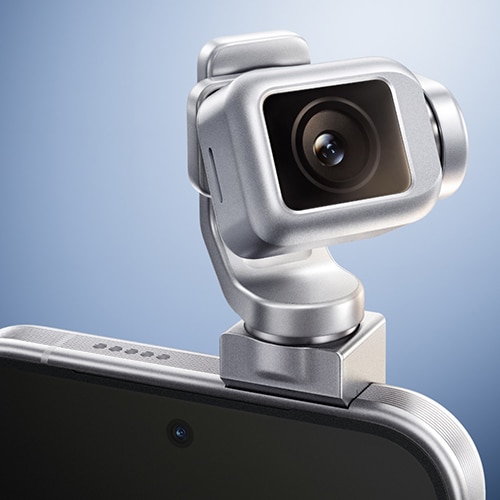
A phone with a robotic arm on the back sounds like a rendering that never made it to production. This one did. The HONOR Robot Phone, which went on sale on August 18, 2026, replaces the usual flat camera bump with a 4-degree-of-freedom mechanical gimbal that physically moves the main lens to stabilize shots — the kind of hardware that normally lives in a separate accessory you’d clip onto a phone, not inside one.
What the Gimbal Does
The centerpiece is what HONOR calls the Titanium Agile Gimbal: a 4-DoF mechanical arm built from more than 100 precision components that can rotate the main camera up to 360 degrees per second, according to HONOR’s official launch announcement. Unlike digital or optical image stabilization, which corrects shake electronically or with small internal lens shifts, this system physically repositions the camera module itself — HONOR says the mechanism is 65% smaller than typical standalone gimbals while handling more torque. In practice, that’s meant for AI subject tracking during video calls and streams, one-tap 90–180 degree rotation, and a “YOYO Robot Mode” that turns the gimbal into something closer to a small animated character, reacting to music and gestures when the phone is set down.
HONOR also partnered with ARRI, the cinema camera manufacturer, to bring 10-bit ARRI LogC3 color profiles to the phone’s video mode, with up to 14 stops of dynamic range — an unusual feature for a phone rather than dedicated filmmaking hardware, aimed at people who want footage that holds up in professional color grading.
Full Specs
The rest of the phone is a current-generation flagship built around the gimbal, not an afterthought bolted onto older hardware:
- Chipset: Qualcomm Snapdragon 8 Elite Gen 5 (3nm)
- Display: 6.31-inch LTPO OLED, 120Hz, 1216×2640 resolution, up to 6,800 nits peak brightness
- RAM/Storage: 12GB+512GB or 16GB+1TB, no expandable storage
- Battery: 7,060mAh silicon-carbon cell with 120W wired and 50W wireless charging
- Main camera: 200MP gimbal-stabilized main lens (f/1.6), 200MP periscope telephoto with 2.7x optical zoom, 50MP ultra-wide
- Front camera: 50MP
- Biometrics: Under-display fingerprint sensor
- Software: Android 16 with MagicOS 10
- Build: 151.4 x 72.9 x 9.6mm, 248g, IP54 splash resistance
- Colors: Silver and Gray
The 7,060mAh battery is large even by current flagship standards, and the 200MP periscope telephoto pairs digital zoom on top of its 2.7x optical range for a claimed 200x total zoom — worth treating as a marketing ceiling rather than a realistic everyday number, since digital zoom that far out degrades sharply on every phone that offers it.
Pricing and Where You Can Buy One
HONOR priced the Robot Phone at RMB 9,999 (roughly $1,380–1,400 at current exchange rates) for the 12GB+512GB model, and RMB 12,999 (roughly $1,790–1,820) for the 16GB+1TB version. Sales began August 18, 2026 — but only in China. HONOR’s own launch material doesn’t mention international markets, and 9to5Google’s reporting on the launch notes there are currently no announced plans to sell the device outside China. Anyone outside the region hoping to buy one directly will likely need to go through a grey-market importer, with the usual tradeoffs that come with that route: no official warranty, no guaranteed carrier band support, and no certainty the software will fully localize.
Why This Matters Even If You Can’t Buy One
The HONOR Robot Phone‘s gimbal camera is the kind of feature that tends to either disappear after one generation or get copied across the industry within a year or two — mechanical image stabilization inside a phone body is a genuinely hard engineering problem, and HONOR shipping a working version at all is notable regardless of where it’s sold. If the approach holds up in real-world use, it’s a reasonable bet that gimbal-style stabilization shows up in more phones from more brands going forward, the same way periscope zoom lenses went from a novelty to a standard flagship feature over a few product cycles. For US and global buyers weighing current options instead, our current smartphone picks covers what’s available to buy right now, and the Nothing Phone 3 remains one of the more distinctive-design options that is sold more broadly.
FAQs
Is the HONOR Robot Phone available in the US or Europe?
Not officially. As of launch, HONOR has only confirmed sales in China, with no announced timeline for a broader international release. Buyers outside China would need to use a grey-market importer, which typically means no official warranty and possible network-compatibility issues.
Does the gimbal camera actually make photos better, or is it just for video?
It helps with both, but the benefit is most obvious in video and low-light stills, where physically stabilizing the camera module reduces blur more effectively than software-only stabilization. For everyday daylight photos, the difference versus a good conventional flagship camera is smaller.
How does the gimbal camera survive drops if it’s a moving mechanical part?
HONOR hasn’t published independent drop-test data at the time of writing, and this is a genuinely new mechanism without a multi-generation durability track record yet. Given that a moving external gimbal is more mechanically exposed than a fixed camera module, it’s a reasonable question to research further before buying, especially through an unofficial import channel with no manufacturer warranty.
What’s the difference between this and a regular phone gimbal accessory?
A clip-on gimbal accessory is a separate device you attach to any phone; HONOR’s Titanium Agile Gimbal is built into the phone itself and moves the camera module directly, rather than moving the whole phone around a stabilized handle. That makes it more compact and always available, but also means it can’t be swapped, upgraded, or used with a different phone the way an accessory can.
Is 200x zoom on this phone actually usable?
The 200x figure combines the camera’s real 2.7x optical zoom with heavy digital zoom on top, and image quality drops off noticeably well before reaching that maximum — a pattern consistent with every phone that advertises very high digital zoom numbers. Treat the optical range as the meaningful number and the extreme digital zoom as a “can technically do it” ceiling rather than daily-use quality.











Discussion about this post