

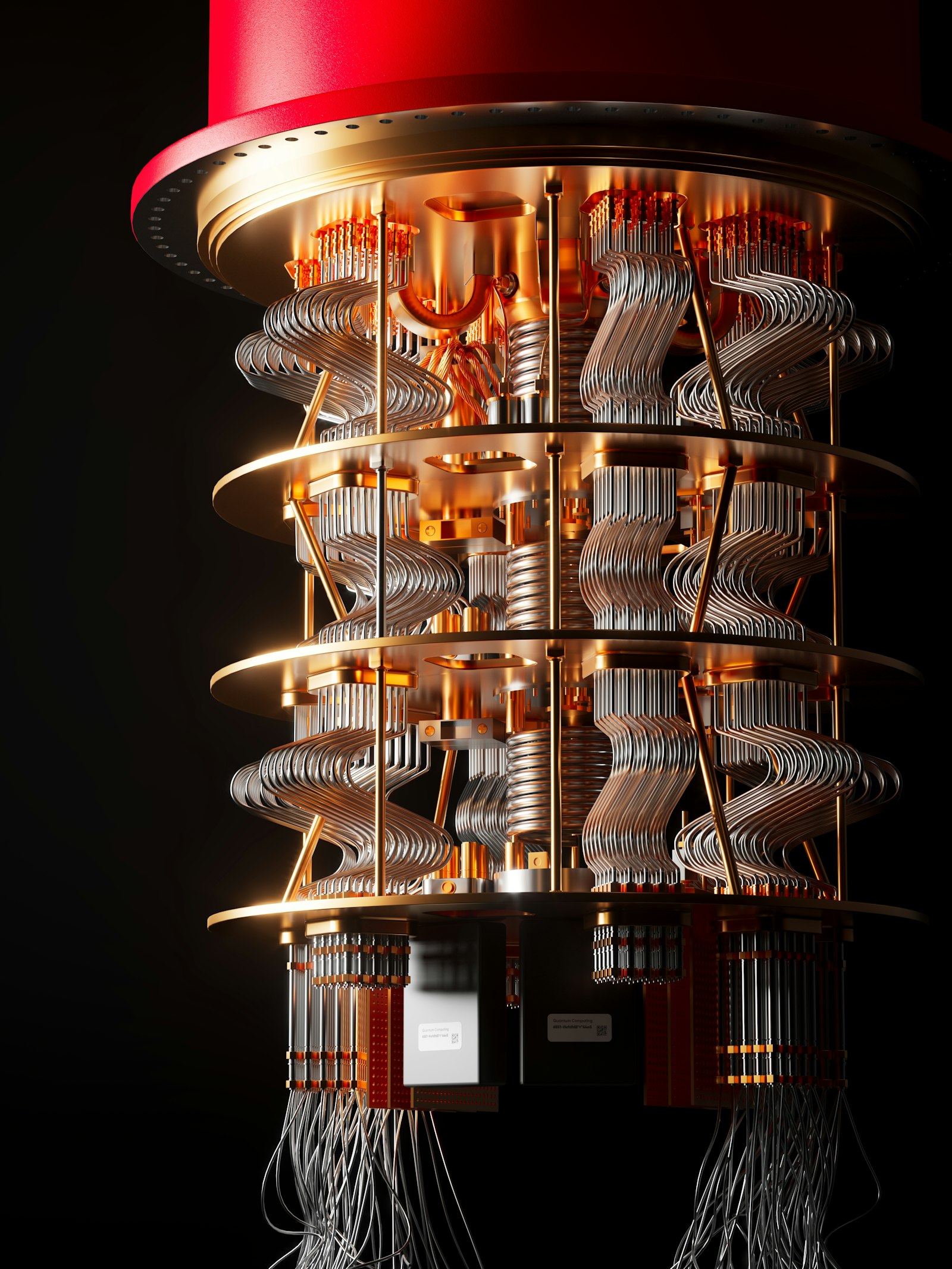
Here’s a fact that surprises most people: the most advanced quantum computers running today, machines with over 1,000 qubits, still can’t reliably outperform a laptop at most everyday tasks, including the kind of spreadsheet math a $10 calculator handles instantly. Quantum computing myths have outpaced the actual technology so thoroughly that separating hype from reality now takes real effort. Some of that confusion comes from strange, counterintuitive physics; some of it comes from years of breathless headlines. Either way, a handful of misconceptions keep showing up in comment sections and casual conversation, so it’s worth walking through what’s real and what isn’t.
Myth: Quantum Computers Try Every Answer at Once
This is probably the most common misunderstanding, and it’s easy to see why: a qubit in superposition does represent something like a mix of 0 and 1 simultaneously, so it sounds like a quantum computer with enough qubits could just check every possible answer to a problem in parallel. It can’t, at least not in a way you can use. As IBM explains, that superposition collapses to a single classical value the moment you measure it, so simply having many qubits explore many states doesn’t hand you a readable answer for free. Quantum algorithms have to be specifically designed to cancel out the wrong answers through interference before measurement, which is why only certain types of problems, not everything, benefit from quantum hardware.
Myth: More Qubits Means More Storage
A related myth treats qubits like a wildly more efficient version of classical bits, since N qubits can represent 2^N states at once. On paper, that sounds like an enormous storage upgrade. In practice, IBM notes that this apparent capacity is unusable for ordinary storage purposes, because measuring a qubit to read out information collapses it back down to a single 0 or 1, the same as a classical bit. A qubit’s real power isn’t as a bigger storage container; it’s in how many of those probability states can be manipulated together before that final measurement, which is a fundamentally different kind of advantage than “more storage.”
Myth: Entanglement Enables Instant Communication
Quantum entanglement gets described in pop-science coverage as a way to send information faster than light, sometimes even across galaxies instantly. It doesn’t work that way. Entangled particles do show correlated measurement outcomes no matter how far apart they are, which is one of the stranger results in physics, but neither party can control what outcome the other person sees, so no usable message can be transmitted through entanglement alone. It’s a real and useful phenomenon, especially for quantum cryptography and networking research, just not a faster-than-light phone line.
Myth: Quantum Computers Will Break All Encryption Tomorrow
This one has a grain of real truth buried in a lot of exaggeration. A sufficiently powerful, fault-tolerant quantum computer could eventually break the public-key encryption that protects most of today’s internet traffic, using an algorithm mathematicians have understood since the 1990s. What gets left out is the “sufficiently powerful” part: today’s quantum hardware is nowhere close to the scale and error correction needed to pull that off, and most serious estimates put a real threat years away rather than months. That said, the risk is taken seriously enough that NIST has already finalized a set of post-quantum cryptography standards, FIPS 203, 204, and 205, specifically designed to resist future quantum attacks, so organizations can start migrating before the threat becomes real rather than after.
Myth: Useful Quantum Computers Are Always “Ten Years Away”
It’s a fair joke, given how long that exact phrase has circulated, but it undersells the real progress being made. Qubit counts, error rates, and coherence times have all improved steadily year over year, and companies are already renting time on real quantum hardware for narrow, practical research problems in chemistry and optimization, well short of a general-purpose replacement for classical computers. The technology isn’t stuck; it’s just further from mainstream usefulness than most headlines imply, and further along than the “always ten years away” joke gives it credit for.
Why This Matters Even If You’ll Never Touch a Quantum Computer
Most people will never personally run a quantum algorithm, but the myths above shape real decisions, from how seriously companies take post-quantum encryption migration to how investors evaluate quantum computing startups. Understanding what the technology does, and doesn’t, do right now is more useful than either dismissing it entirely or assuming it’s about to upend everything overnight. If you want the fuller picture, our quantum computing explainer covers the basics from the ground up, our look at real applications already happening covers where the technology is genuinely being used today, and our piece on quantum computing and encryption goes deeper into the security angle touched on above.
FAQs
Are quantum computers faster than regular computers at everything?
No. For the vast majority of everyday computing tasks, from browsing the web to running a spreadsheet, a classical computer is faster, cheaper, and more reliable. Quantum computers only show an advantage on a specific, narrow category of problems, like certain simulation and optimization tasks, where their unusual properties can be put to direct use.
Do I need to worry about quantum computers breaking my passwords right now?
Not today. Current quantum hardware isn’t close to breaking modern encryption, and standards bodies like NIST have already published quantum-resistant replacements well ahead of any real threat. The practical takeaway is that organizations should start planning a migration, not that individual passwords are at risk this year.
What is a qubit, in simple terms?
A qubit is the quantum version of a classical bit. Where a bit is strictly 0 or 1, a qubit can exist in a superposition representing both at once, until it’s measured, at which point it collapses to a definite 0 or 1 just like a regular bit, only the process of getting there works very differently.
Is quantum computing the same as quantum AI?
No, though the two are often mentioned together. Quantum computing is a distinct hardware and computational approach; “quantum AI” usually refers to early, experimental research into whether quantum hardware could someday accelerate certain machine learning tasks, an area that’s still mostly theoretical rather than something powering products today.
Which companies are building real quantum computers right now?
IBM, Google, and D-Wave are among the most prominent, each pursuing different hardware approaches with real, currently operating machines, and a growing list of startups like Rigetti and IonQ are pursuing their own architectures as well. Progress varies significantly by approach, so headline qubit counts alone don’t tell the full story of which system is actually more capable.








Discussion about this post