

There’s a persistent myth in gaming forums that you need to spend close to $300 to actually hear an enemy’s footsteps before they hear yours. It isn’t true. Driver quality, spatial audio tuning, and mic clarity matter far more than raw price, and some of the best gaming headsets on the market right now prove that a $40 wired set and a $350 wireless flagship can both be the right choice, just for very different players. This roundup compares current picks by platform rather than crowning one universal winner, pulling verified specs from each manufacturer’s own product pages plus testing from outlets like SoundGuys.
Best for PC: Sony INZONE H9 II
Sony’s INZONE H9 II carries a $349.99 list price and earns it by borrowing the driver unit straight from the WH-1000XM6, Sony’s flagship consumer headphone, and tuning it specifically for competitive play in partnership with the Fnatic esports team. It connects via a bundled 2.4GHz USB-C dongle for near-zero latency, plus Bluetooth and a wired fallback, and runs active noise cancellation in either wireless or wired mode. At roughly 260 grams with a pressure-balanced headband, it’s built to stay comfortable through multi-hour sessions, and Sony’s Sound Connect app includes Fnatic-tuned EQ presets for titles like Valorant and Apex Legends.
Best for PlayStation 5: PULSE Elite
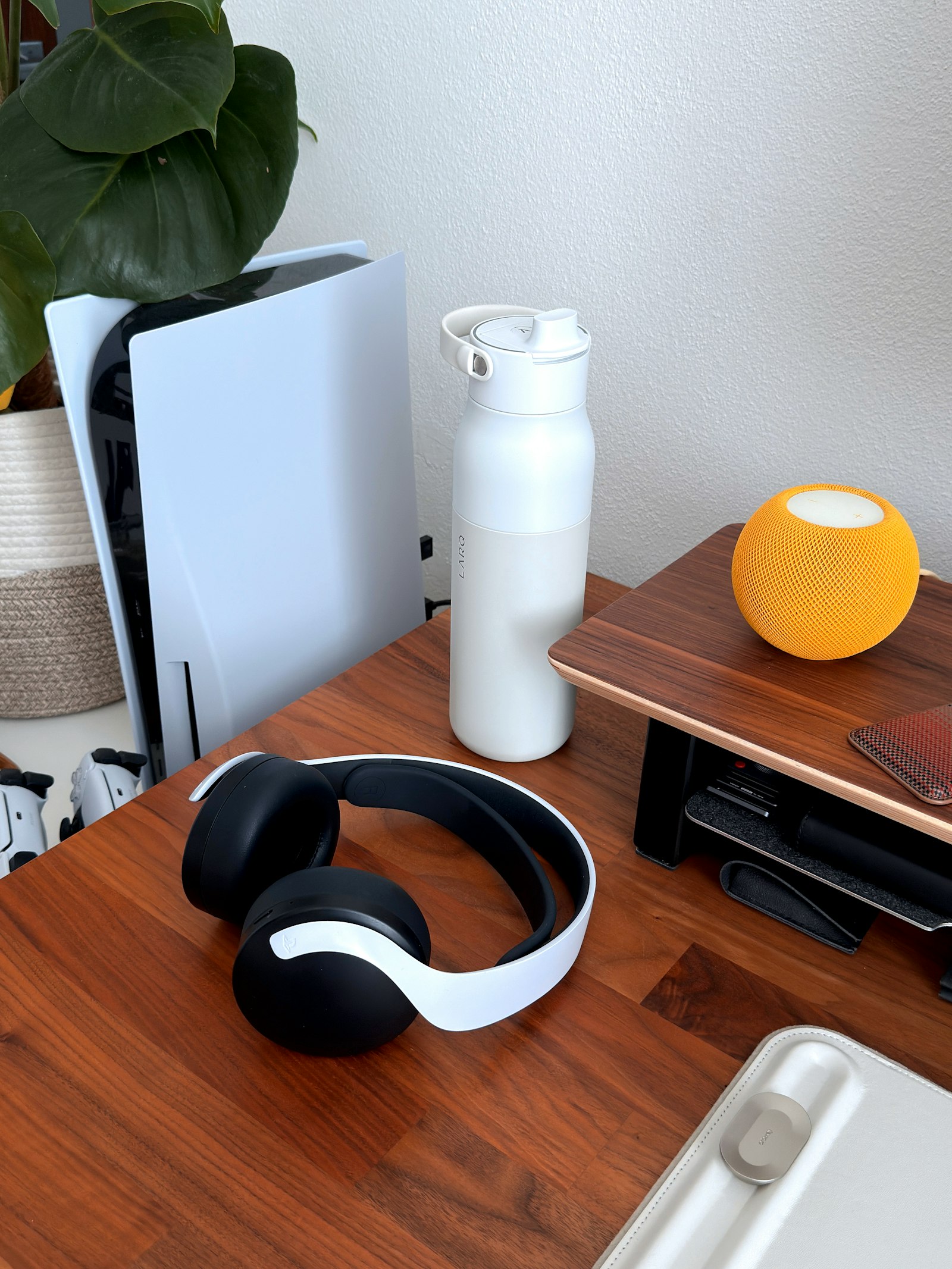
Sony’s own PULSE Elite is the more console-native choice, priced at $149 directly through PlayStation. It uses planar magnetic drivers, a design more commonly found in higher-end audiophile headphones than gaming gear, and connects through PlayStation Link wireless technology across PS5, PlayStation Portal, PC, Mac, and mobile devices rather than locking you into one console. Sony rates it for up to 30 hours of battery life with quick charging, and the included charging hanger doubles as a stand rather than a separate dock taking up desk space. The retractable boom mic uses AI-powered noise rejection, a feature that’s become close to standard at this price tier.
Best for Xbox: Turtle Beach Stealth 700 Gen 3
Turtle Beach’s Stealth 700 Gen 3 lists at $199.99 but is frequently discounted to around $149.99, and its standout spec is battery life: Turtle Beach rates it for up to 80 hours per charge, with a 15-minute quick charge adding roughly 3 more hours. Dual USB wireless transmitters let it switch between an Xbox and a PC without re-pairing, alongside simultaneous 2.4GHz and Bluetooth 5.2 connections. The 60mm Eclipse dual drivers are tuned for spatial audio, and the companion Swarm II app handles EQ presets and button remapping if you want to customize beyond the defaults.
Best Budget Pick: HyperX Cloud Stinger 2 Core
Not every setup needs wireless. HyperX’s wired Cloud Stinger 2 Core costs $39.99 and covers the basics well: 40mm neodymium drivers, a swivel-to-mute noise-cancelling boom mic, and onboard volume controls so you’re not digging through a software menu mid-match. It’s PC-focused but works over a standard 3.5mm connection on nearly anything with a headphone jack, including most controllers. It won’t touch the spatial audio or noise cancellation of the pricier picks above, but for a second headset, a kid’s setup, or anyone who just wants reliable audio without paying for features they won’t use, it’s hard to beat at this price.
Quick Comparison
| Model | Best For | Connection | Battery | Price |
|---|---|---|---|---|
| Sony INZONE H9 II | PC, competitive play | 2.4GHz / Bluetooth / wired | 30 hrs | $349.99 |
| PULSE Elite | PlayStation 5 | PlayStation Link wireless | 30 hrs | $149 |
| Stealth 700 Gen 3 | Xbox, multiplatform | 2.4GHz + Bluetooth 5.2 | 80 hrs | $149.99 (was $199.99) |
| Cloud Stinger 2 Core | Budget, PC | Wired 3.5mm | N/A | $39.99 |
If your setup leans more toward streaming or cloud play than local hardware, it’s worth cross-checking our guide to how cloud gaming services compare, and if you’re weighing a headset against a portable rig, our best handheld gaming PCs roundup covers that side of the setup. For everyday listening off the gaming rig, our noise-cancelling headphones guide covers general-purpose picks that trade gaming-specific features for all-day comfort and travel use.
FAQs
Does a more expensive gaming headset actually help you win more games?
Beyond a certain baseline, no. A cheap headset with muddy audio genuinely can put you at a disadvantage by masking directional footstep cues, but once a headset delivers clear positional audio, spending more mostly buys comfort, battery life, and extra features rather than a measurable competitive edge.
Is wireless latency actually noticeable in competitive games?
Dedicated 2.4GHz gaming dongles, the kind bundled with all three wireless picks here, are built specifically to avoid the lag that can come with standard Bluetooth. Bluetooth alone can introduce a small but real delay, which is why most gaming-focused wireless headsets default to a proprietary 2.4GHz connection instead.
Can I use a PlayStation headset on Xbox, or vice versa?
Not directly in most cases. Sony’s PlayStation Link technology and Turtle Beach’s Xbox-licensed wireless protocols are platform-specific, so a headset built around one won’t wirelessly pair with the other console, though most support a basic wired 3.5mm connection as a fallback on any platform.
What’s the difference between stereo and spatial audio in gaming headsets?
Stereo audio separates sound into left and right channels only. Spatial audio processing simulates a fuller 3D soundstage, helping you judge not just left-or-right but distance and elevation, which matters most in shooters where knowing whether footsteps are coming from above or below can be the difference between reacting in time or not.







Discussion about this post