

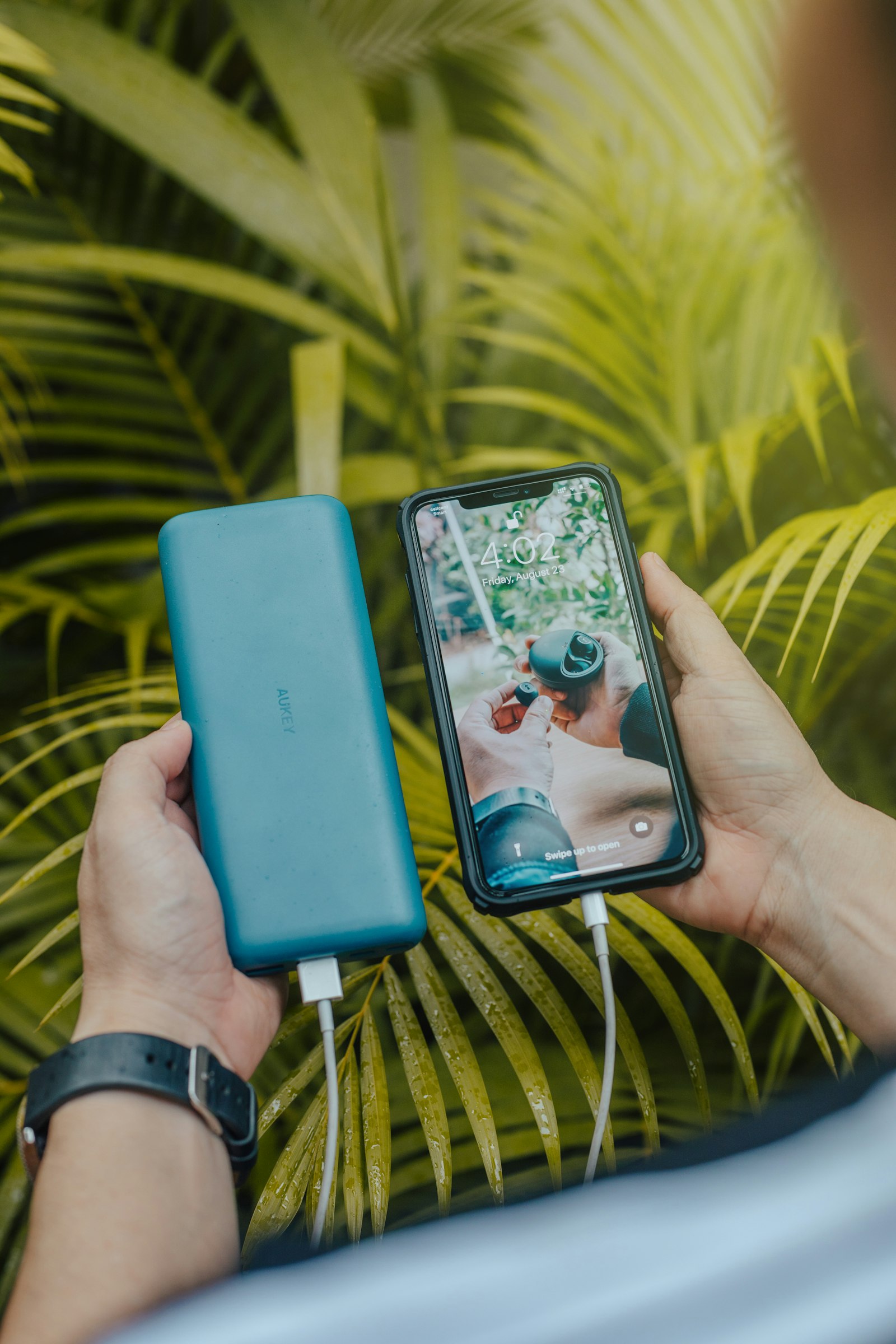
What actually happens when your phone hits 8% battery in the middle of a travel day, and the only outlet in sight has a line of people waiting for it? A good portable charger solves that problem before it starts, but the category has gotten more complicated than it looks. Capacity numbers on the box don’t tell the whole story, and the wattage a power bank claims often isn’t what reaches your specific device. This roundup pulls together current, verified picks across the price range, based on manufacturer specs and testing from outlets like Engadget, rather than a single in-house test of every model.
What to Check Before You Buy
Three numbers matter more than anything else on the spec sheet. Capacity, measured in mAh, tells you roughly how many phone charges you’ll get, though real-world output is always lower than the rated number due to voltage conversion loss, typically 70-80% of what’s printed on the box. Output wattage determines how fast a bank can charge your specific device; a phone tops out well below 65W, but a laptop or tablet can pull much more. And port type matters just as much as wattage: a bank rated for 100W is only fast if it’s delivering that power over USB-C with Power Delivery, the industry standard that lets a charger and device negotiate the right voltage automatically rather than forcing a fixed, often mismatched, output.
Best Overall: Anker Prime 20,000mAh (220W)
Anker’s Prime line is the current benchmark for anyone who wants one power bank to cover a phone, a tablet, and a laptop without carrying three separate chargers. It packs a 20,100mAh cell with 220W max output split across two USB-C ports (140W each) and one USB-A port, plus a small built-in display that shows real-time wattage and remaining charge through Anker’s companion app. It’s priced at $179.99, discounted from a $229.99 list. For most people this is more bank than they need day to day, but if you’re regularly charging a laptop on the go, it earns the price.
Best for Everyday Carry: Anker Nano Foldable (5,000mAh)
Not everyone wants to carry a brick. Anker’s foldable Nano bank holds a more modest 5,000mAh at 22.5W output, small enough to live in a jacket pocket permanently rather than only coming out for trips. It won’t touch a laptop, but for topping a phone up from 30% to full during a commute or a long meeting, it’s the bank people remember to bring with them, which matters more than a bigger number on a spec sheet nobody checks.
Best Budget Pick: Belkin BoostCharge 20K with Integrated Cable
Belkin’s 20,000mAh BoostCharge model skips the premium display and multi-port complexity in favor of a built-in USB-C Power Delivery cable, so there’s nothing extra to pack or lose. At $49.99, it’s a genuine budget option rather than a stripped-down version of something worse, and the integrated cable is a real convenience if you’ve ever reached for a power bank only to realize your charging cable is in another bag.
Best for Laptops: Anker’s 165W Laptop Power Bank
If a laptop is the device you need to keep alive, a phone-focused bank won’t cut it no matter how large its capacity looks. Anker’s laptop-oriented bank holds 25,000mAh with a built-in cable and up to 165W output, enough to fast-charge most USB-C laptops, including MacBooks, alongside your phone from a second port. It’s a heavier, bulkier carry than the other picks here, so it makes the most sense as a travel-day bag item rather than a daily pocket companion.
Quick Comparison
| Model | Capacity | Max Output | Best For | Price |
|---|---|---|---|---|
| Anker Prime 220W | 20,100mAh | 220W | Phone + tablet + laptop | $179.99 |
| Anker Nano Foldable | 5,000mAh | 22.5W | Everyday phone top-ups | Budget-friendly |
| Belkin BoostCharge 20K | 20,000mAh | USB-C PD | Budget, no cable needed | $49.99 |
| Anker Laptop Bank | 25,000mAh | 165W | Charging a laptop on the go | Premium |
Whichever bank you land on, it pairs naturally with the rest of a travel-ready kit. If you’re also weighing what else is worth packing, our roundup of tech gadgets worth trying and our list of affordable tech gadgets cover complementary picks, and if you’re powering a pair of earbuds or a wearable on the same trip, our smart wearables guide is worth a look too.
FAQs
How do I know what wattage power bank I actually need?
Check your device’s own charging spec first. Most phones charge fastest somewhere between 20W and 45W, tablets often want 30-65W, and laptops can range from 45W up to 140W or more depending on the model. Buying far beyond what your devices can accept just adds weight and cost without any real benefit.
Can I bring a portable charger on a plane?
Yes, but airlines cap capacity, typically at 100Wh (roughly 27,000mAh at standard voltage) for carry-on without special approval, and portable chargers must go in carry-on luggage, never checked bags. Always check your specific airline’s current policy before flying, since limits and packing rules do vary.
Does fast charging damage my phone’s battery over time?
Modern phones manage charging speed internally and throttle input as the battery approaches full, so occasional fast charging from a good power bank isn’t a meaningful risk. Consistently charging from very low to 100% and back, regardless of speed, causes more long-term wear than the charging speed itself.
What’s the difference between mAh and Wh when comparing power banks?
mAh (milliamp-hours) measures charge capacity at a specific voltage, while Wh (watt-hours) measures total energy and is what airlines regulate. To convert, multiply mAh by voltage (usually 3.7V for lithium cells) and divide by 1,000; a 20,000mAh bank is roughly 74Wh.
Is it worth paying more for a power bank with a display?
It depends on how you use it. A display showing exact remaining charge and live wattage is genuinely useful if you’re managing multiple devices or trying to plan a trip around charging stops, but it adds cost and isn’t essential if you just want a reliable top-up for a single phone.










Discussion about this post