

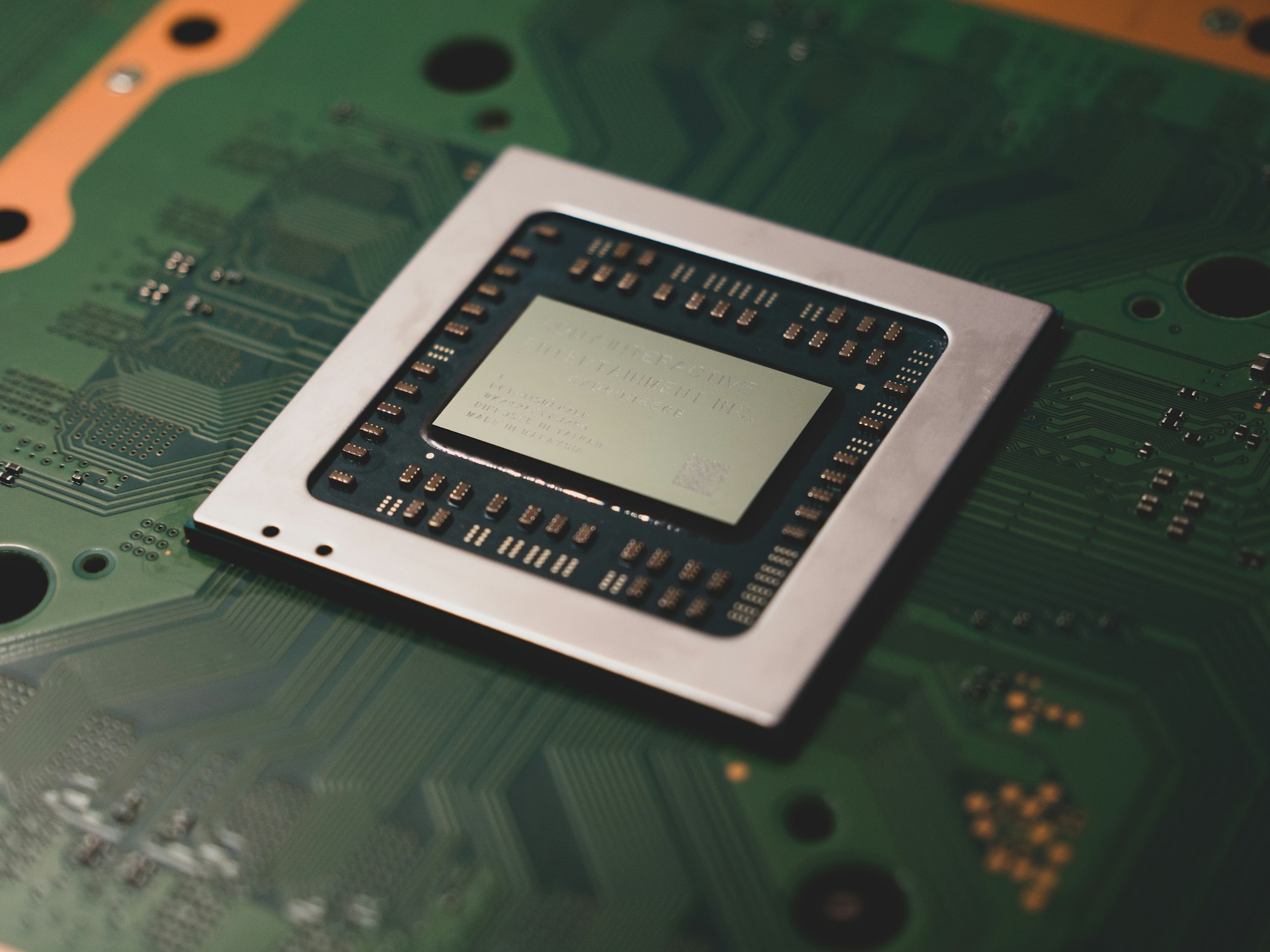
Why does every quantum computing announcement come with a record qubit count, and yet the companies making those announcements still say a truly useful, general-purpose quantum computer is years away? The honest answer isn’t about qubit count at all. It’s about errors. Qubits are extraordinarily fragile, and the real bottleneck holding the entire field back is quantum error correction, the science of keeping a calculation accurate long enough to finish it.
Why Qubits Break So Easily
A classical bit in your laptop is rock-solid; it’s either a 0 or a 1, and it stays that way until something deliberately changes it. A qubit is nowhere near as stable. It has to be kept in a delicate quantum state called superposition, and almost anything, a stray vibration, a tiny temperature fluctuation, even cosmic rays, can disturb that state and introduce an error. This effect, called decoherence, gets worse the longer a calculation runs and the more qubits are involved, which is exactly the opposite of what you’d want from a computer you’re trying to scale up.
The “Below Threshold” Breakthrough
For decades, this created a nasty paradox: adding more qubits to do bigger calculations also meant adding more opportunities for errors, so scaling up made the reliability problem worse, not better. That changed with Google’s Willow chip. According to Google’s own announcement, Willow demonstrated that “the more qubits we use, the more we reduce errors,” a result called going “below threshold.” Google’s team tested grids of qubits at increasing sizes, 3×3, 5×5, and 7×7, and found the error rate was cut in half each time the grid grew larger, the opposite of what happens without proper error correction. Google describes this as resolving a challenge that had been outstanding “since quantum error correction was introduced by Peter Shor in 1995.”
Logical Qubits vs. Physical Qubits
The way error correction actually works is by grouping many unreliable physical qubits together into one more reliable “logical” qubit, using the redundancy to detect and correct errors before they ruin the calculation, similar in spirit to how a hard drive can use redundant data to recover from a damaged sector. That’s why raw physical qubit counts can be a misleading headline number on their own: a chip with a thousand physical qubits organized into a handful of well-protected logical qubits can be more genuinely useful than a chip with more physical qubits but weaker error correction. It’s also why Google’s 105-qubit Willow chip, comparatively modest in raw qubit count, made bigger real news with its below-threshold result than some larger, less error-corrected systems have.
Where the Big Labs Say They’re Headed
IBM has laid out one of the most detailed public roadmaps toward fixing this at scale. Per IBM’s own November 2025 announcement, the company’s Loon processor is an experimental chip built specifically to demonstrate “all the key processor components needed for fault-tolerant quantum computing,” while IBM says it has already achieved real-time quantum error decoding in under 480 nanoseconds, a 10x speedup over its previous best approach, achieved a year ahead of IBM’s own internal schedule. IBM’s stated target is 2029 for what it calls the world’s first large-scale, fault-tolerant quantum computer, a machine reliable enough to run calculations that would be meaningfully useful outside a research lab. If you want the fuller picture of what quantum hardware is already doing today, short of that fault-tolerant milestone, our look at real quantum computing applications covers the pilot projects already underway at companies like Boeing and Wells Fargo.
Why This Matters More Than the Qubit Race
Headlines chasing the biggest qubit number can obscure the more important story, which is whether those qubits are actually error-corrected well enough to run a long, complex calculation without the result dissolving into noise. A useful mental shortcut, when a new quantum computing announcement crosses your feed, is to check whether it mentions error rates or error correction progress specifically, rather than just a bigger qubit count on its own. That distinction is also worth keeping in mind against some of the more overstated claims circulating about the technology; our piece on quantum computing myths and misconceptions covers several related misunderstandings, including the common assumption that more qubits automatically means more computing power.
The Bottom Line
Quantum error correction, not qubit count, is the real race in quantum computing right now, and it’s the reason every major lab’s own roadmap points years into the future rather than promising a fault-tolerant machine tomorrow. Google’s below-threshold result and IBM’s fault-tolerance roadmap are both genuine, verifiable progress on that specific problem, which makes them more meaningful signals of real advancement than another record-setting qubit count on its own. If you’re new to the underlying concepts here, our plain-language quantum computing explainer is a good place to start before digging into error correction specifically.
FAQs
What is quantum error correction, in simple terms?
It’s the set of techniques used to detect and fix errors in a quantum computer’s calculations without directly measuring the fragile qubits doing the work, since measuring a qubit collapses its quantum state. It typically works by grouping several physical qubits together to protect one more reliable “logical” qubit.
What does “below threshold” mean in quantum computing?
It means that adding more qubits to a properly error-corrected system reduces the overall error rate instead of increasing it, which is the opposite of how uncorrected quantum systems behave. Google’s Willow chip was the first to demonstrate this clearly, cutting its error rate in half as its logical qubit grids grew larger.
Why can’t companies just add more qubits to solve the error problem?
Without proper error correction, more qubits mean more opportunities for something to go wrong, since each additional qubit is itself fragile and prone to disturbance. Error correction has to improve alongside qubit count, or scaling up just makes the reliability problem worse.
When will a fully fault-tolerant quantum computer actually exist?
IBM’s public roadmap targets 2029 for what it describes as the world’s first large-scale, fault-tolerant quantum computer. That’s a company projection, not a guarantee, and timelines in this field have shifted before as the underlying engineering challenges turned out to be harder than expected.
Does quantum error correction affect quantum computing’s threat to encryption?
Yes, directly. Breaking modern public-key encryption would require a large-scale, fault-tolerant quantum computer, which is exactly what error correction research is working toward. That’s part of why standards bodies like NIST have already finalized post-quantum encryption standards well ahead of that capability actually existing.





Discussion about this post