

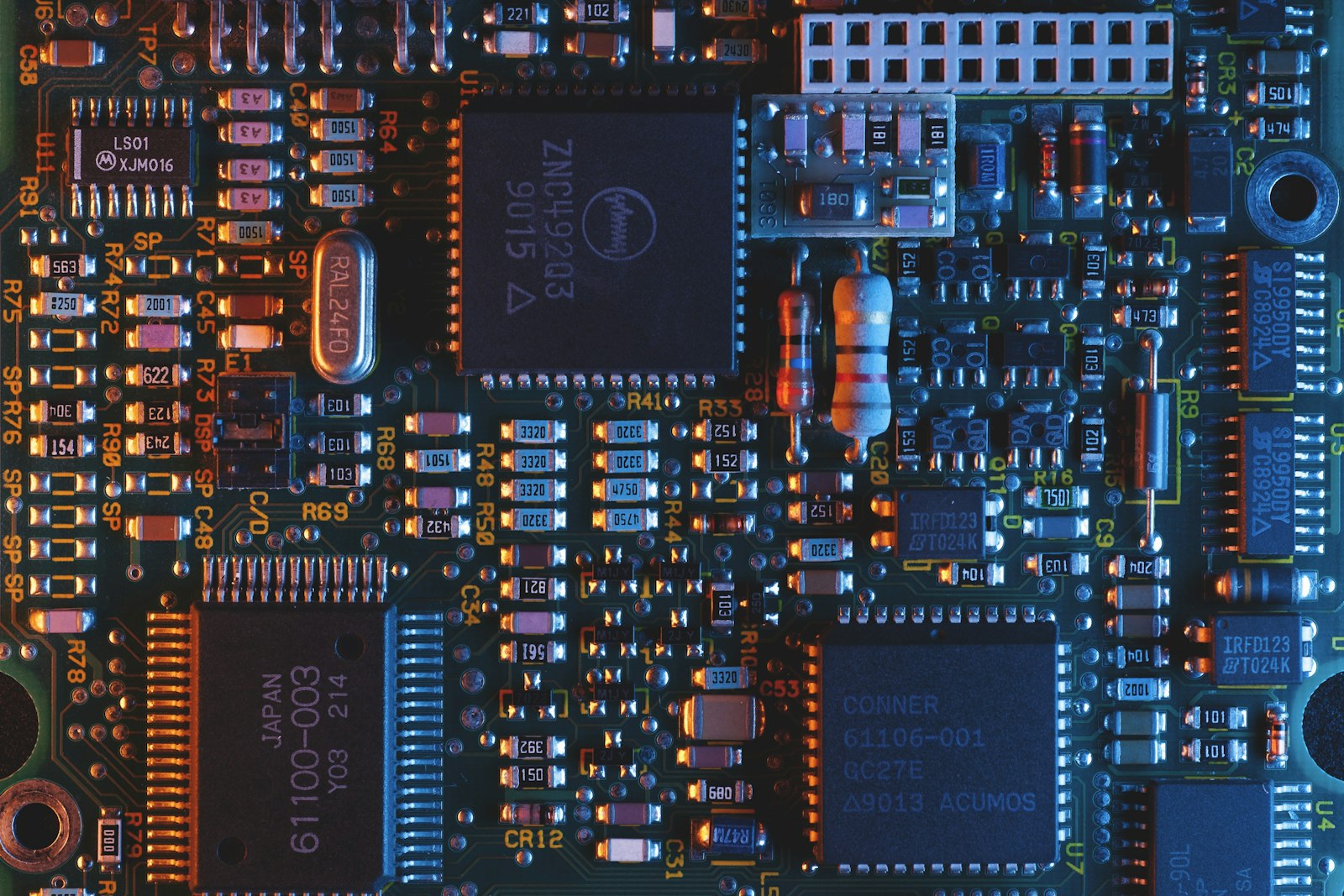
Picture two laptops on a shop shelf. Both run the same chatbot app, yet one drains its battery in three hours while the other sips power all afternoon. The difference is rarely the app. It is which part of the machine does the AI math, and that comes down to the AI chips inside.
Modern devices carry three kinds of processors that can all run AI workloads, each with a different personality. Knowing the split helps you read spec sheets without being fooled by marketing numbers.
Why AI Needs Different Hardware
Most AI models, from image generators to chatbots, boil down to an enormous number of multiplications and additions on grids of numbers called matrices. Nothing about this is exotic. The trouble is volume: a single response can involve billions of these operations, and they need to happen fast.
A processor built for general tasks handles them one small batch at a time. Hardware built for parallel work can do thousands at once. That is the whole story behind the shift in chip design over the last decade.
The Three Players: CPU, GPU, and NPU
CPU: The Generalist
The central processing unit runs your operating system, your browser, and nearly everything else. It is flexible and good at sequential logic, but it has only a handful of powerful cores. It can run small AI tasks, such as spell-check suggestions, without trouble. Large models make it struggle.
GPU: The Parallel Workhorse
Graphics processors were designed to shade millions of pixels at the same moment, which turned out to be an excellent match for matrix math. That is why GPUs became the standard for training large models in data centers, and why a gaming graphics card can also run local AI tools. The cost is power draw: a capable GPU uses a lot of electricity and generates heat.
NPU: The Efficient Specialist
A neural processing unit is a chip block built only for the operations neural networks need. Microsoft’s own documentation describes an NPU as specialized hardware for AI-intensive processes that handles large amounts of data in parallel while using energy more efficiently than a CPU or GPU, which helps battery life. In practice, NPUs sit inside the same chip as the CPU and GPU, so you rarely buy one separately.
Phones have carried NPUs for years, which is why features like photo enhancement and live transcription can run without a data connection. The same idea is now moving into laptops, a trend we covered from the phone side in our guide to on-device AI.
What “TOPS” Means (and Where It Misleads)
TOPS stands for trillions of operations per second, the headline figure on NPU spec sheets. Microsoft’s Copilot+ PC program uses it as an entry bar: its documentation lists an NPU capable of more than 40 TOPS as the key requirement for those machines, and names supported chips from Qualcomm (Snapdragon X series), AMD (Ryzen AI 300 series), and Intel (Core Ultra 200V series).
It is a useful screening number, but a few cautions apply:
- TOPS measures peak theoretical throughput, not how fast a real app runs.
- Vendors may quote the figure at different numerical precisions, so comparing across brands is shaky.
- Memory bandwidth, software support, and model size often decide real-world speed more than the TOPS figure does.
Treat TOPS as a minimum threshold, not a scoreboard.
Which Chip Handles Which Job?
Here is a rough rule of thumb for everyday use:
- Background, always-on tasks such as noise removal on calls, background blur, or live captions suit the NPU, because low power matters more than raw speed.
- Heavy bursts such as generating images locally or running a large language model fit the GPU, where memory and parallel muscle are available.
- Light, quick tasks with unpredictable logic stay on the CPU.
Operating systems and apps increasingly route work automatically, so you seldom choose manually. What you can choose is the machine you buy.
Cloud AI Chips Are a Different League
The chips in your laptop are built for running small and medium models on a battery. Data centers use accelerators designed for training and serving giant models around the clock, with huge memory and fast interconnects between cards. That gap is why the most capable chatbots still live in the cloud. If you want to compare what those cloud assistants can do, see our roundup of the best AI chatbots.
Do You Need an NPU Laptop?
For most buyers today, not urgently. If you mainly browse, write, and stream, a current laptop without a strong NPU will do fine. An NPU matters more if you take many video calls on battery, want local transcription, or expect to use on-device AI features that Windows and app makers keep adding. Buying a flagship phone already gets you a capable NPU, as our list of the best smartphones to buy reflects.
FAQs
What is the difference between an NPU and a GPU?
A GPU is a flexible parallel processor that handles graphics and many kinds of heavy computation, while an NPU is built only for neural-network operations. The NPU gives up flexibility to use much less power, which suits always-on AI features on battery-powered devices.
Is a higher TOPS number always better?
No. TOPS is a peak theoretical figure, and real performance also depends on memory bandwidth, numerical precision, and software support. Use it to check that a chip clears a minimum bar, such as the 40 TOPS Microsoft lists for Copilot+ PCs, rather than to rank machines.
Can I run AI without an NPU?
Yes. A CPU or GPU can run AI models, though usually with higher power use or slower speed. An NPU mainly makes background AI features more efficient rather than making them possible.
Why do AI companies use GPUs instead of NPUs for training?
Training giant models needs large memory, high precision, and flexible math, which GPUs and data-center accelerators provide. NPUs in consumer devices target running smaller trained models efficiently, not training new ones.
Do phones really have AI chips?
Yes. Modern phone processors include dedicated neural hardware alongside the CPU and GPU, which is what powers on-device features like transcription and photo processing without sending data to a server.










Discussion about this post