
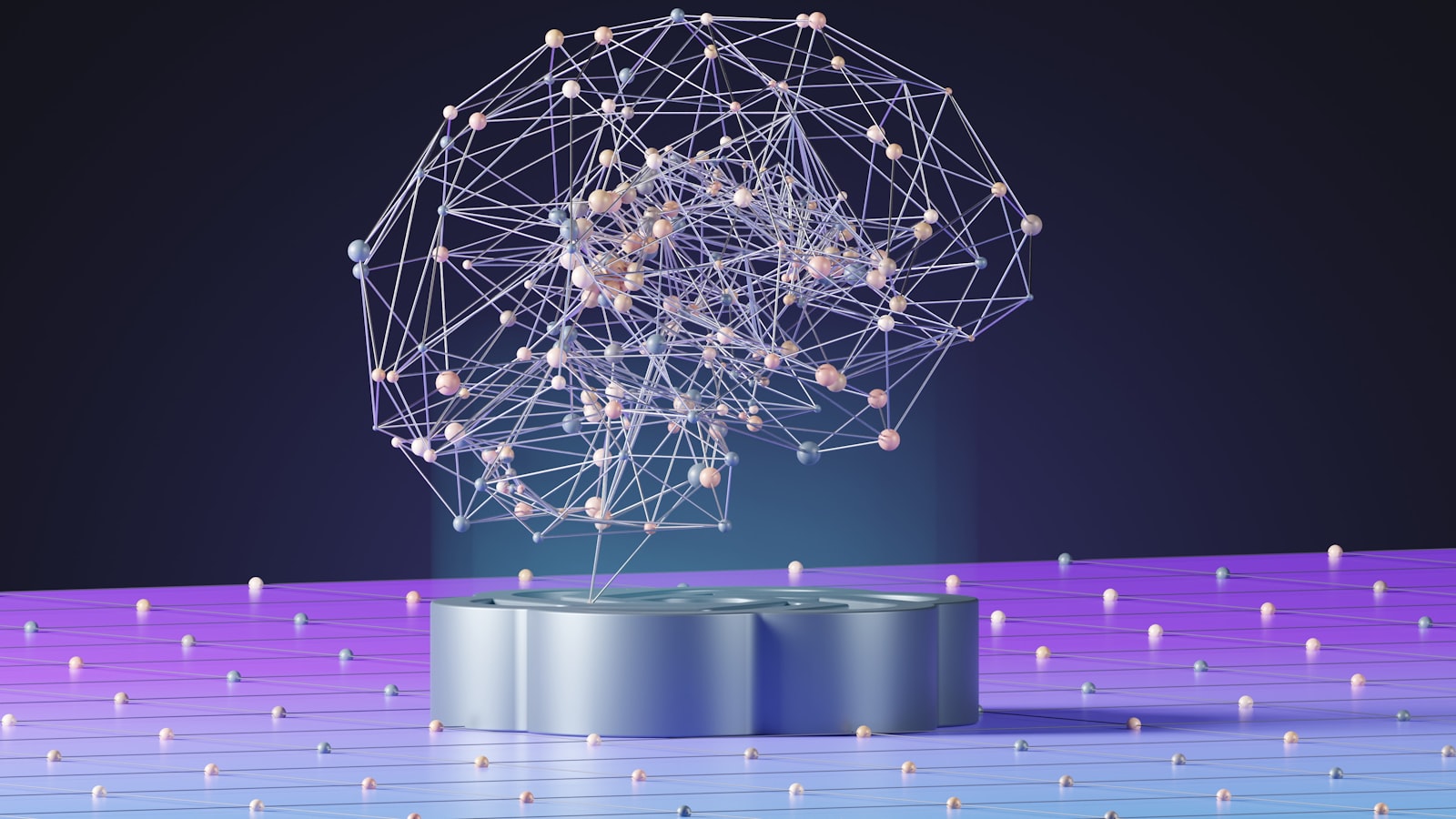
Type a single sentence and, in under ten seconds, get back a fully rendered image — no camera, no stock photo license, no illustrator involved. That’s the pitch behind every one of today’s AI image generators, and it’s not a novelty act anymore: hundreds of millions of images now get created this way every month. But how does a tool actually turn a string of words into a coherent picture, and why do some models still fumble a hand while others render flawless text on a poster? Here’s what’s happening under the hood, who the major players are right now, and the copyright question nobody’s fully answered yet.
How AI Image Generators Actually Work
Almost every major tool on the market today — Midjourney, Stable Diffusion, and the image models built into ChatGPT and Gemini — relies on a technique called diffusion. The process starts backwards from how you’d expect: the model begins with a canvas of pure random noise and gradually “denoises” it, step by step, into a coherent picture. At each step, a separate text-understanding component checks the emerging image against your prompt and nudges the denoising process toward whatever you described.
To learn how to do this, these models were trained on enormous datasets pairing images with text captions, learning statistical relationships between words like “golden retriever,” “watercolor,” or “neon-lit alley” and the pixel patterns that correspond to them. The result isn’t a database lookup — it’s closer to the model having learned a compressed, generalized sense of what things look like, which is why it can combine concepts it’s never seen paired together before.
Who’s Leading Right Now
The field moves fast enough that “best” changes every few months, but a handful of tools currently stand out for different reasons:
- OpenAI’s GPT Image 2, rolled out through ChatGPT as “ChatGPT Images 2.0,” focuses heavily on legible text rendering, multilingual support across scripts like Arabic, Japanese, and Devanagari, and keeping a consistent look across multiple panels of the same scene.
- Google DeepMind’s Gemini 3 Pro Image, nicknamed Nano Banana Pro, leans on Gemini’s broader reasoning to produce accurate infographics and diagrams, supports up to 4K output, and can hold up to five consistent characters and around a dozen objects across a set of related images.
- Midjourney is still the go-to for stylized, painterly, or moody results, and remains a favorite among artists and designers for that reason even as its interface stays more prompt-driven than its rivals.
- Stable Diffusion, from Stability AI, is the major open-weight option — you can download and run it on your own hardware, which matters to developers who want full control or need to avoid sending prompts to a third-party server.
Where They Still Struggle
Text and hands used to be the two dead giveaways of an AI-generated image, and while both have improved dramatically, neither is fully solved. Complex scenes with overlapping objects, precise counts (ask for “exactly seven coins” and you might get six or nine), and factual accuracy in generated diagrams can still go wrong. Bias baked into training data is a separate, ongoing concern — models can default to narrow or stereotyped depictions unless a prompt actively steers away from them. None of this makes the tools unreliable for casual use, but it’s worth treating anything with fine factual detail — a chart, a historical scene, a technical diagram — with the same skepticism you’d apply to an uncredited stock illustration.
The Copyright Question Nobody’s Fully Answered
This is the part that trips up creators and businesses the most. According to the U.S. Copyright Office’s policy guidance, when an AI tool receives a prompt and independently produces an image, the “traditional elements of authorship” are determined by the technology, not the person typing the prompt — which means a purely AI-generated image generally isn’t eligible for copyright protection on its own. Where a human meaningfully arranges, edits, or combines AI-generated elements with their own original work, that human contribution can be registered, but the AI-generated portions still have to be disclaimed in the application. In practice, that means a logo or hero image you generated with one prompt and used as-is may not be legally protectable the way a commissioned illustration would be — something worth knowing before you build a brand around it.
Getting Better Results When You Use One
Vague prompts get vague images. Being specific about subject, style, lighting, and composition — rather than a single adjective — makes a bigger difference than switching tools entirely, and it’s worth treating your first result as a draft to refine rather than a final answer. If you want a deeper walkthrough of phrasing and iteration techniques that carry over from text prompts to image prompts, our guide to writing better AI prompts covers the same underlying skill. And if you do end up publishing AI-generated images on a website, they still need the basics — real, descriptive alt text and sensible file sizes — which our piece on optimizing images for your website walks through regardless of who or what created the image.
FAQs
Are AI-generated images free to use commercially?
It depends entirely on the tool and the plan you’re using. Most paid tiers of the major generators grant fairly broad commercial usage rights, while free tiers often restrict commercial use or require attribution. Always check the specific terms of service for the tool and plan you’re on before using an output in paid work.
Can I copyright an image I made with an AI generator?
Under current U.S. Copyright Office guidance, an image that’s purely the output of a text prompt generally isn’t eligible for copyright on its own. If you substantially edit, combine, or arrange AI-generated elements with your own original creative work, that human contribution may be registrable, though the AI-generated portions still need to be disclaimed.
Which AI image generator is best for a beginner?
If you already use ChatGPT or Gemini, their built-in image tools are the easiest starting point since there’s nothing new to learn. Midjourney tends to produce more visually striking results but has a steeper prompting curve, and Stable Diffusion is better suited to people comfortable running software locally.
Do these tools train on copyrighted artwork?
Many of the datasets used to train earlier generations of these models included images scraped from the public web without explicit licensing from the original creators, and this is currently the subject of multiple ongoing lawsuits against several AI companies. The legal outcome of those cases hasn’t been settled yet.
Can AI image generators create accurate text and logos now?
Text rendering has improved substantially with newer models — both GPT Image 2 and Gemini 3 Pro Image are specifically built to produce clean, legible text in multiple languages, something earlier diffusion models were notoriously bad at. It’s still worth double-checking spelling and brand accuracy before using generated text in anything public-facing.


Discussion about this post