

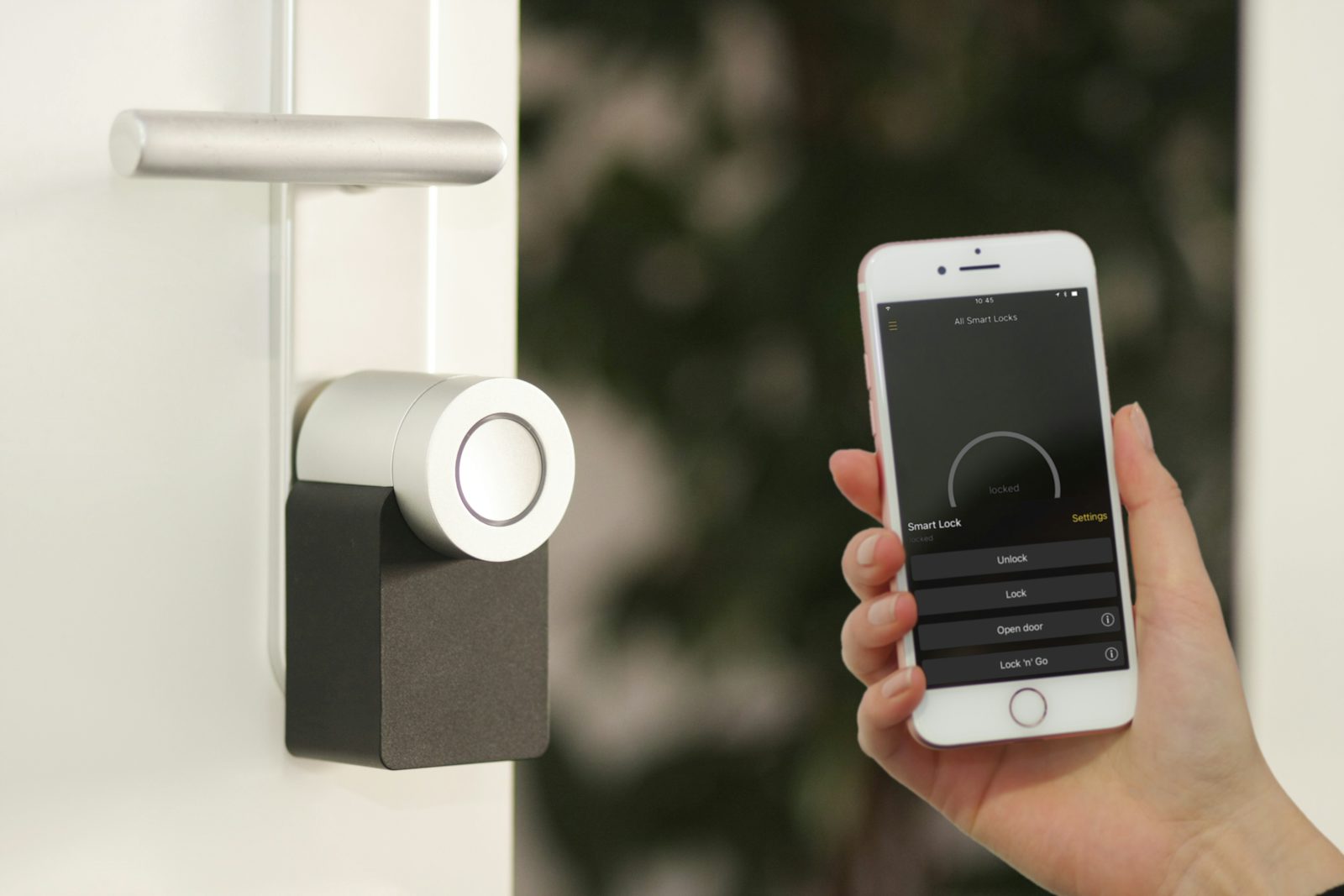
Most people picture a smart lock as a full replacement for the deadbolt on their front door. Plenty are. But a good number of today’s best-selling locks don’t touch your existing cylinder at all, they clip onto the inside of the deadbolt you already have and let you keep your current keys and the outside hardware untouched. Knowing which type you’re buying changes the installation, the look of your door, and even how the lock gets powered. This roundup compares three current picks that represent the main approaches, using each manufacturer’s own product pages rather than hands-on testing.
Retrofit or Full Replacement: The First Decision
A retrofit smart lock mounts on the inside of your door over your existing deadbolt and turns it automatically, so the outside of your door looks exactly as it did before, with the same keyhole and the same physical keys still working as backup. A full-replacement lock swaps out the entire deadbolt mechanism, inside and out, which usually means more features (keypads, cameras, fingerprint readers) but a more involved install and a different look on your front door. Neither is objectively better; it depends on whether you’re a renter who can’t modify the exterior, or a homeowner who wants a clean single unit.
August Wi-Fi Smart Lock: The Retrofit Pick
August’s Wi-Fi Smart Lock is the clearest retrofit example here. Per August’s own product page, it attaches to the inside of your existing deadbolt, so you keep your current keys and outside cylinder. It has built-in Wi-Fi, so no separate bridge or hub is needed to control it remotely, and it works with Apple HomeKit, Amazon Alexa, and Google Assistant. August’s FAQ lists battery life at up to three months on two CR123 batteries, which is notably shorter than some full-replacement competitors, something worth factoring in if you don’t want to swap batteries often. A built-in DoorSense sensor reports whether the door itself is actually closed, not just whether the lock is engaged, which is a detail separate from the locking mechanism itself. Pricing on August’s site fluctuates with promotions, so check the current listing rather than relying on any figure printed elsewhere.
Level Lock: Built to Disappear Into the Door
Level’s pitch is different: a full deadbolt replacement engineered to hide almost all of its hardware inside the door itself, so from either side it looks close to a normal deadbolt rather than an obvious smart device. Level’s own page lists the standard Level Lock at $249, with a Pro version at $349 and a simpler Level Bolt at $199. It connects over Bluetooth and, per Level’s spec list, is Matter-over-Thread compatible, which matters if you want it working alongside devices from more than one smart home ecosystem; our explainer on the Matter smart home standard covers why that cross-brand compatibility is worth checking before you commit to any smart home device. Level’s page states the lock runs on a single CR2 lithium battery for up to a year, a notably longer interval than August’s retrofit model, and the company’s own comparison claims the Level Lock is meaningfully smaller than competing models, since most of its mechanism sits inside the door rather than bolted to the surface.
Schlage Encode Plus: The Apple-Integrated Option
Schlage’s Encode Plus targets a different audience: Apple households that want tap-to-unlock convenience. Schlage’s own product page lists it at $329 with built-in Wi-Fi (no bridge required, though it needs a 2.4GHz network) and native support for Apple Home keys, meaning an iPhone or Apple Watch can unlock the door with a tap rather than needing a separate code or app session. Instead of physical keypad buttons, it uses a fingerprint-resistant touchscreen and supports up to 100 access codes, useful for households or short-term rentals that need to hand out individual codes. It runs on four AA batteries for roughly six months and carries real security certifications worth knowing about: Schlage’s spec sheet lists ANSI/BHMA A156.40-2015 Grade AAA, the industry’s top residential security, durability, and finish rating, plus a separate ANSI/BHMA A156.36 Commercial Grade 1 listing. Schlage’s page does not mention Matter support, so if cross-ecosystem compatibility matters more to you than Apple integration specifically, that’s worth weighing against Level’s Matter-over-Thread claim above.
How to Decide Between Them
If you rent, or just don’t want to touch the outside of your door, August’s retrofit approach is the lowest-commitment option, with the trade-off of more frequent battery changes. If you want a single unit that looks closest to a normal deadbolt and works across more than one smart home platform, Level’s Matter support and battery life are the stronger case. If your household already lives inside Apple’s ecosystem and you want tap-to-unlock plus a strong security certification on paper, Schlage’s Encode Plus is the most feature-dense of the three. In every case, a lock is only as good as the rest of your home network, so a stable connection matters: our guide to smart thermostats and comparison of home security cameras cover two more categories worth checking into the same ecosystem decision before you commit to one smart home platform over another.
FAQs
Do I need to replace my whole deadbolt to get a smart lock?
No. Retrofit models like the August Wi-Fi Smart Lock attach to the inside of your existing deadbolt and leave the outside hardware and your current keys untouched. Full-replacement models like Level Lock and Schlage’s Encode Plus swap out the entire mechanism instead.
Is Matter support important for a smart lock?
It can be, especially in a household that mixes Amazon, Google, Apple, or Samsung smart home devices. A Matter-compatible lock, like Level’s Matter-over-Thread model, is designed to work across more than one of those ecosystems rather than being locked into just one app.
How long do smart lock batteries really last?
It varies a lot by design. Manufacturer figures here range from roughly three months (August’s retrofit model, on two CR123 batteries) up to about a year (Level, on one CR2 battery) and around six months (Schlage’s Encode Plus, on four AA batteries), so check this spec specifically rather than assuming all locks behave the same way.
Are smart locks as secure as traditional deadbolts?
Reputable brands publish independent security ratings rather than just marketing claims. Schlage’s Encode Plus, for example, lists an ANSI/BHMA A156.40-2015 Grade AAA rating, the top tier for residential locks, on its own spec sheet. Checking for a named certification, rather than taking “bank-level security” style language at face value, is a reasonable way to compare models.
Can I still use a physical key with a smart lock?
Often yes, but not always. Retrofit models like August’s keep your existing outside keyhole fully functional. Full-replacement models vary; Schlage’s Encode Plus, for instance, includes one physical backup key, while some other full-replacement models skip a physical key entirely in favor of codes and app access.






Discussion about this post