

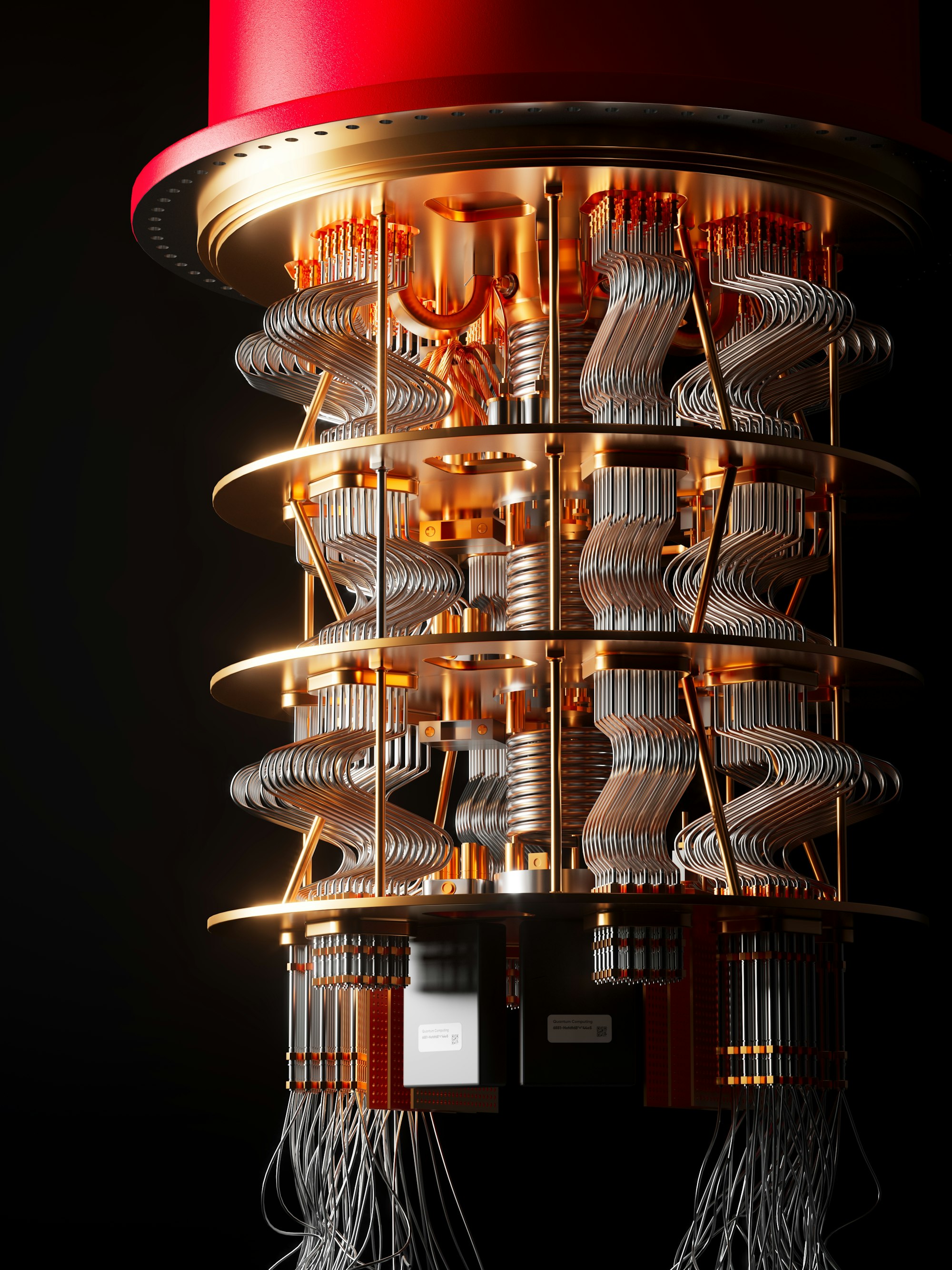
Qubits are extraordinarily sensitive to their surroundings, which is why every working superconducting quantum computer today needs serious refrigeration before it can run a single calculation. Not a home freezer or even a lab fridge, but a device that pushes temperatures down near absolute zero, colder than empty space between stars. Here’s what quantum computing cooling really involves, and why a 2026 engineering announcement from IBM is a bigger deal than it might sound.
How Cold Is Cold
IBM’s own account of a 2026 cryogenics milestone puts a number on it: the company cooled a pair of connected cryogenic modules to below 15 millikelvin, which IBM describes as more than 180 times colder than deep space. Absolute zero, the theoretical point where atomic motion stops entirely, is 0 Kelvin. Fifteen millikelvin is just 0.015 degrees above that line. Deep space, by comparison, still sits at roughly 2.7 Kelvin thanks to leftover radiation from the early universe, which is why IBM can accurately say its processors run colder than the vacuum between galaxies.
The Dilution Refrigerator
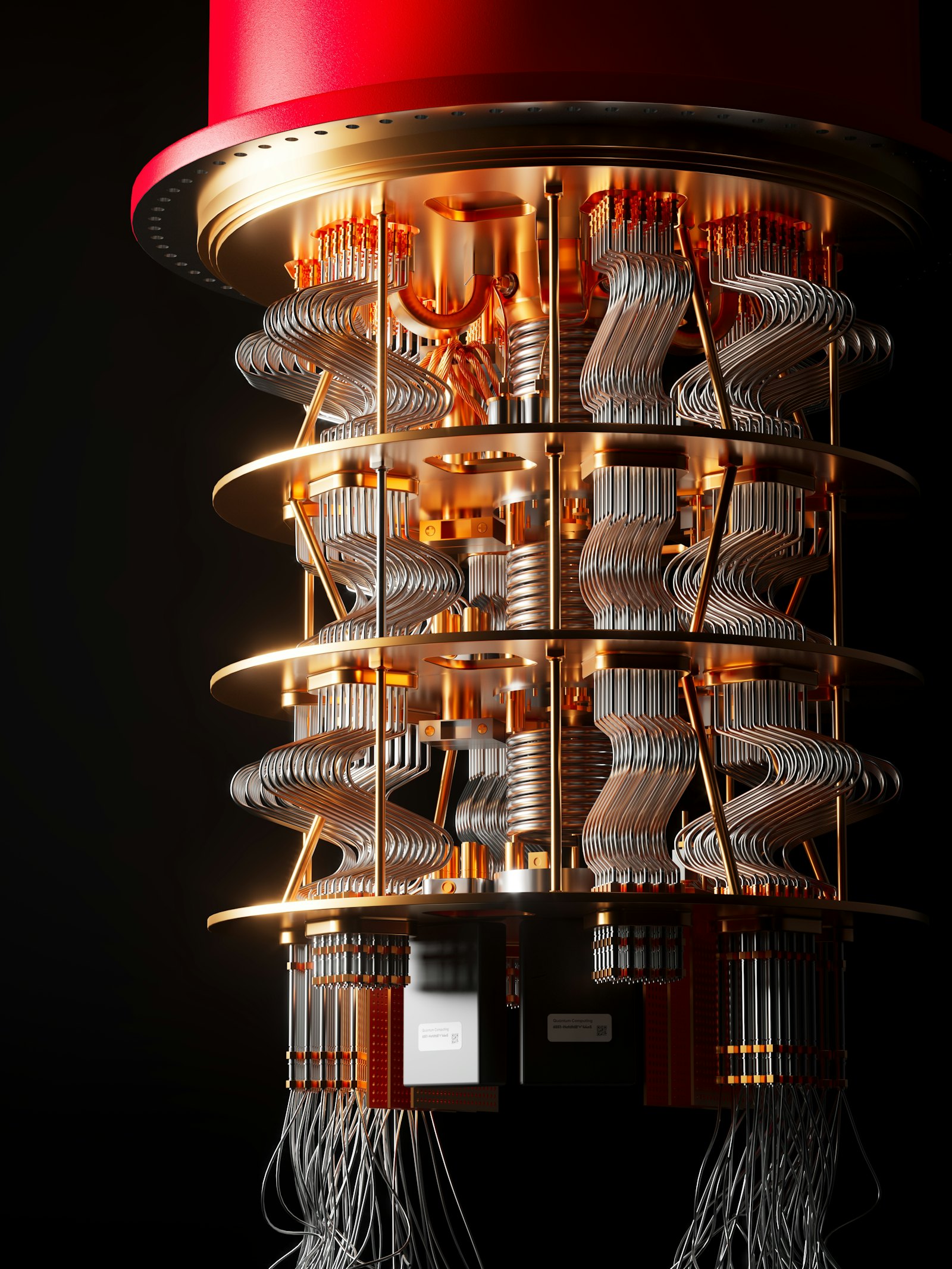
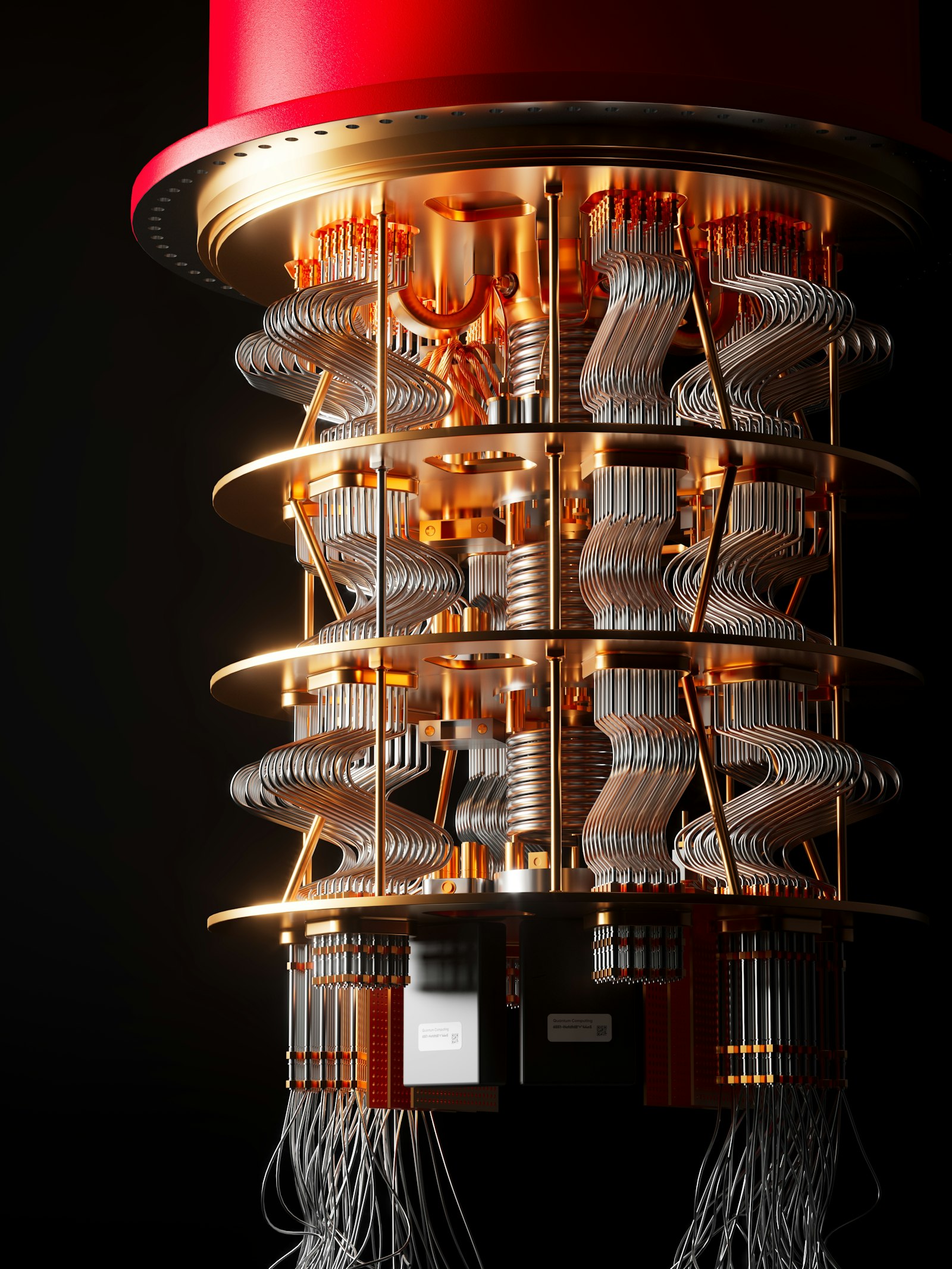
The device that gets a quantum processor that cold is called a dilution refrigerator. IBM’s own blog describes it as cooling processors “to temperatures near absolute zero” in stages, with the chip itself sitting on the bottom, coldest tier of a multi-tiered structure. The whole setup lives inside a sealed, vacuum-insulated enclosure called a cryostat, which IBM says exists specifically “to minimize sources of potential disruption such as excess heat and thermal noise.” Getting there isn’t instant, either: in IBM’s own tests, two linked modules took under five days to reach 4 Kelvin together before dropping to below 15 millikelvin shortly after, a cooldown measured in days, not minutes.
Why Qubits Demand This in the First Place
Superconducting qubits only behave like qubits, holding a delicate quantum state instead of collapsing into an ordinary classical one, once they’re cold enough that thermal vibrations stop jostling them. Any stray heat or electrical noise can flip a qubit’s state or cause it to lose its information entirely, a failure mode generally called decoherence. That fragility is also a big part of why building a quantum computer that can correct its own errors is such a hard engineering problem; our explainer on why quantum error correction is so hard to solve covers the error side of this same underlying sensitivity.
IBM’s 2026 Modular Cryogenics Announcement
On August 19, 2026, IBM announced it had successfully joined and cooled two separate cryogenic modules into a single shared environment, a step the company frames as a milestone toward fault-tolerant quantum computing. Each module’s vacuum enclosure offers up to 12 times more internal wiring space than IBM’s most widely used prior systems, roughly 0.53 square meters of wiring area and 2.75 cubic meters of vacuum volume per cell, according to IBM’s own figures. More wiring space matters because every additional qubit needs its own set of control and readout lines running down into that same cold environment, and those wires become a physical bottleneck long before the physics of the qubits themselves does.
IBM says it plans to use connectors it calls L-couplers to link processors across modules like these into a single machine with at least 1,000 programmable qubits by 2027, installing newer Nighthawk processors into the modules later in 2026. The company ties this work to Starling, which it describes as aiming to be the world’s first fault-tolerant quantum computer, targeted for 2029. In other words, this isn’t cooling for its own sake, it’s a direct response to the fact that a bigger quantum computer needs a bigger, better-organized refrigerator before it needs almost anything else.
Not Every Quantum Computer Needs This Much Cold
All of this applies specifically to superconducting qubits, the approach IBM and Google both use. Other hardware designs sidestep the deep-cryogenic requirement in different ways; trapped-ion and photonic systems, for instance, generally don’t need temperatures anywhere near as extreme, trading that advantage for other engineering challenges instead. Our comparison of the types of quantum computers breaks down how those different hardware approaches stack up against each other, cooling requirements included. For a broader primer on what a qubit is and how it differs from an ordinary bit, our guide to how quantum computing works is the right starting point.
FAQs
Why do quantum computers need to be so cold?
Superconducting qubits lose their delicate quantum state if heat or electrical noise disturbs them, a failure called decoherence. Cooling the processor to near absolute zero, inside a dilution refrigerator and a sealed cryostat, keeps that disturbance low enough for the qubits to actually hold information.
How cold do quantum computers get?
IBM’s 2026 cryogenics tests reached below 15 millikelvin, which the company describes as more than 180 times colder than deep space. Absolute zero is 0 Kelvin, so that’s just 0.015 degrees above the coldest theoretically possible temperature.
What is a dilution refrigerator?
It’s the specialized, multi-tiered cooling device used to bring a superconducting quantum processor down to near-absolute-zero temperatures, with the chip itself sitting at the coldest bottom stage. It sits inside a sealed, vacuum-insulated cryostat built to block outside heat and electrical interference.
Do all quantum computers need extreme cooling?
No. This applies mainly to superconducting-qubit systems like IBM’s and Google’s. Trapped-ion and photonic quantum computing approaches generally don’t require the same deep-cryogenic environment, though each comes with its own different engineering trade-offs.
Why did IBM link two cryogenic modules together instead of building one bigger one?
Scaling a single dilution refrigerator indefinitely runs into physical limits, especially around wiring space for each additional qubit. IBM’s modular approach, connecting separate cryogenic cells with components it calls L-couplers, is designed to scale past those limits toward a machine with at least 1,000 programmable qubits by 2027.









Discussion about this post