

There is a security technology whose pitch sounds almost too good to be true: a way to share a secret key where any eavesdropper would leave visible fingerprints, guaranteed by the laws of physics. That technology is real, it has been demonstrated for decades, and yet the U.S. National Security Agency says it does not recommend it for protecting national security systems. Quantum key distribution is a fascinating case of an idea that is sound in theory and complicated in practice.
This article explains what it does, what it does not do, and why it often gets confused with the very different fix for quantum-era security.
The Problem It Tries to Solve
Most encryption depends on two parties holding the same secret key. The hard part is getting that key to both sides without anyone intercepting it. Today’s internet handles this with mathematical tricks that are easy to compute one way and extremely hard to reverse. A large enough quantum computer could break some of those tricks, which is the threat our guide to how quantum computing threatens (and fixes) encryption covers in detail.
Quantum key distribution, or QKD, takes a different route. Rather than relying on a hard math problem, it uses the behavior of individual particles of light to set up a shared key.
How QKD Works
The basic idea is simple to state. One side sends a stream of single photons, encoded with random settings, to the other side. The receiver measures them, also with random settings. Afterward the two sides compare notes over an ordinary channel, throw away the measurements that did not line up, and keep the rest as raw key material.
The security comes from a property of quantum measurement: observing a quantum state generally disturbs it. If an eavesdropper tries to read the photons in transit, errors creep into the data. When the two parties check a sample of their results and see more errors than expected, they know someone was listening and discard the key. The signal itself is not secret; the point is that spying becomes detectable.
To understand why quantum states behave this way, see our explainer on what quantum computing is for the basics of qubits and measurement.
What the NSA Says About It
The strongest public skepticism comes from the NSA, which has published its position on its own site. The agency states that it does not support the usage of QKD or quantum cryptography to protect communications in National Security Systems unless certain limitations are overcome. Its listed concerns include:
- It is only a partial solution. QKD provides keying material but does not authenticate the source of the transmission. The NSA notes that authentication still needs other cryptography or pre-placed keys.
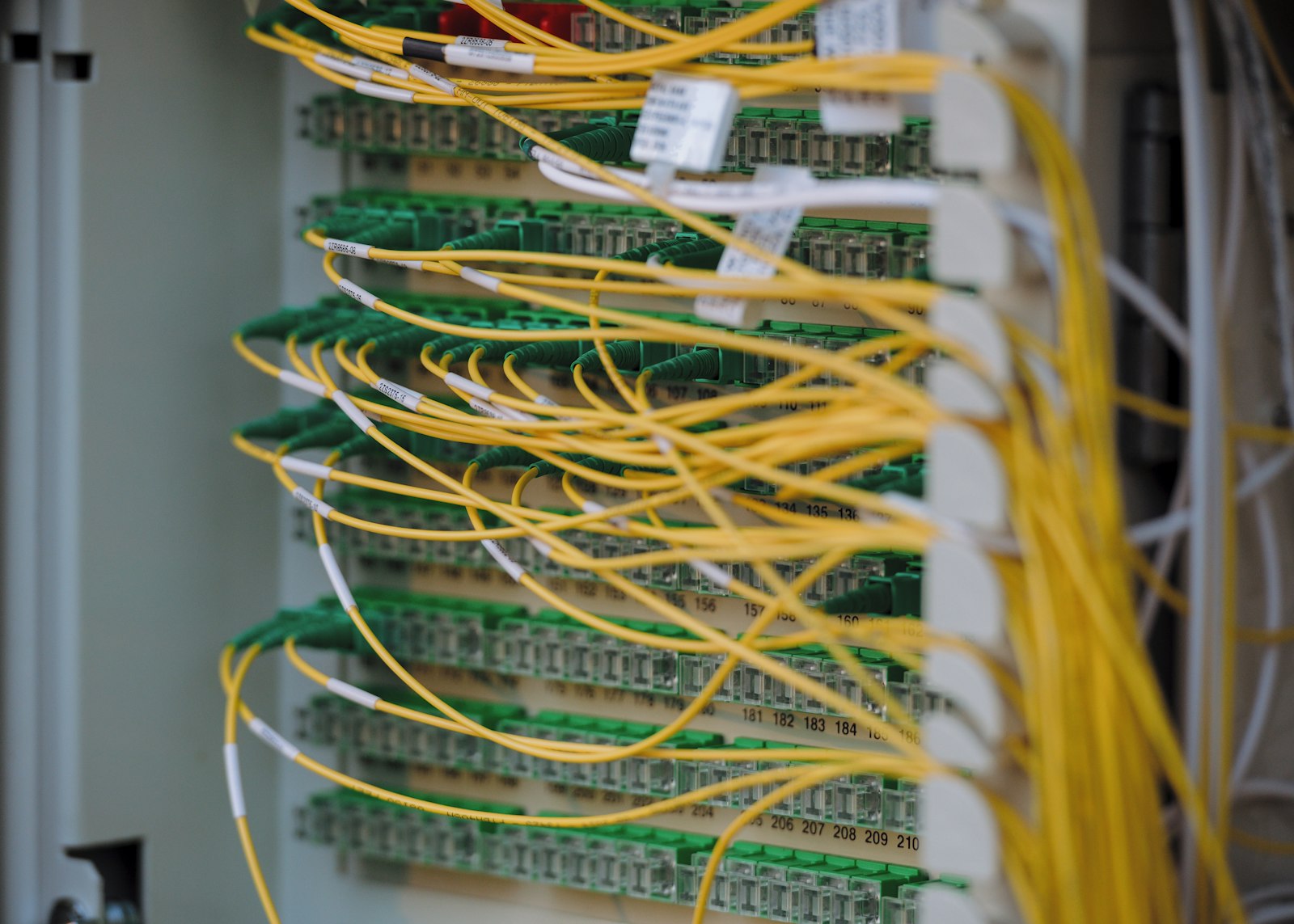
- It needs special hardware. QKD requires dedicated equipment, such as leased fiber or free-space transmitters, and cannot be implemented in software or as a network service. Hardware-based systems also lack flexibility for upgrades and security patches.
- It raises costs and insider risk. Longer networks often need trusted relay nodes, which add expense and create places where a malicious insider could matter.
- Real systems are hard to validate. The agency says security rests on engineering rather than only on physics, and cites published attacks on commercial QKD hardware.
- It increases denial-of-service risk. The same sensitivity that exposes an eavesdropper also means an attacker can disrupt the link.
The NSA also cautions that claims of security “guaranteed by the laws of physics” overstate things, since real-world security depends heavily on implementation.
The Alternative: Post-Quantum Cryptography
The NSA’s preferred answer is post-quantum cryptography, which means ordinary algorithms built on math problems believed to resist quantum attacks. The agency says these run on existing platforms and are typically less expensive than QKD. NIST leads the standardization effort, and you can follow its work on the post-quantum cryptography project page. Note that the NSA page was written while NIST’s selection process was still underway, so check NIST for the current status of the standards.
The key contrast: post-quantum cryptography is software you can update over the internet, while QKD is hardware tied to specific links.
Where QKD Still Makes Sense
None of this makes QKD useless. It remains an active research and pilot area, especially for point-to-point links between fixed sites where an organization controls both ends and the fiber in between. Some governments and telecom operators run trial networks. The practical question is whether the added hardware buys enough security over software-only methods, and the NSA’s answer, for its own purposes, is no for now.
A Common Mix-Up
People often use “quantum encryption” as a catch-all. It helps to separate three things:
- Quantum key distribution: uses quantum physics to share keys.
- Post-quantum cryptography: ordinary math-based encryption designed to withstand quantum computers.
- Quantum computers: machines that could break some current encryption. For a reality check, read our piece on quantum computing myths.
FAQs
What is quantum key distribution in simple terms?
It is a method of sharing an encryption key by sending single particles of light, set up so that any eavesdropping disturbs the signal and can be detected. Once both sides have a clean key, they use it with ordinary encryption.
Is QKD the same as post-quantum cryptography?
No. QKD uses quantum hardware to distribute keys, while post-quantum cryptography uses classical algorithms designed to resist quantum computers and runs on standard devices.
Why doesn’t the NSA recommend QKD?
The agency cites its need for special hardware, lack of source authentication, higher infrastructure cost, difficulty validating real implementations, and increased risk of denial of service.
Can QKD be hacked?
The physics is not the usual weak point, but the equipment can be. The NSA’s page points to published attacks on commercial QKD hardware, which is why implementation quality matters.
Will QKD replace today’s encryption?
Unlikely in the near term. It needs dedicated links and hardware, so it is better viewed as a niche tool for specific connections than a replacement for software-based encryption.












Discussion about this post