

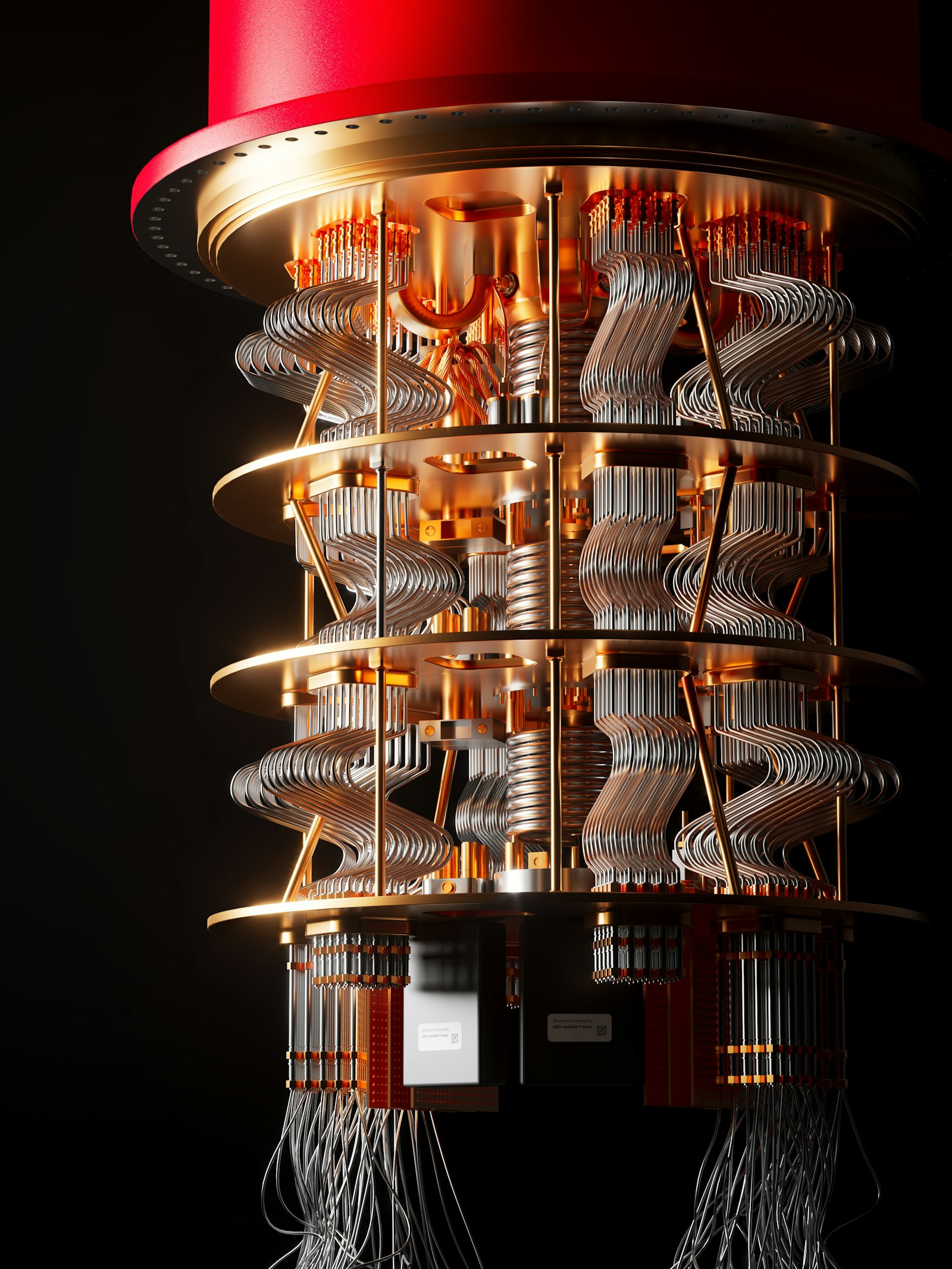
It’s easy to think of quantum computing and AI as two separate headlines competing for the same spotlight: one about qubits, one about chatbots and models. In practice, the two fields are already tangled together, and the term quantum AI gets used loosely to describe a relationship that actually runs in two very different directions at once. AI is helping today’s imperfect quantum computers work better right now, while researchers separately explore whether quantum computers might someday help AI models train or run faster. Only one of those two directions has real, working results behind it today.
Two Directions, Not One
When people say “quantum AI,” they usually mean one of two very different things. The first is using classical machine learning to solve engineering problems inside quantum computers themselves, control, calibration, and error correction. The second is using quantum hardware to accelerate machine learning tasks, sometimes called quantum machine learning. They get discussed together constantly, but they’re at completely different stages of maturity.
Where AI Is Already Helping Quantum Computers
This direction is the one with actual results, not just plans. Google’s Willow chip, first detailed in a Google Research blog post, runs reinforcement learning and graph-based algorithms as part of its error-correction pipeline, decoding measurement data in real time to identify and correct qubit errors as they happen. That software is a direct reason Willow became the first processor to show error rates dropping exponentially as its error-correction grid got larger, a result that took nearly three decades of research to demonstrate. In plain terms: machine learning is already doing real, load-bearing work inside quantum hardware today, not in some future roadmap. Our deeper look at quantum error correction covers why that problem is so hard to solve in the first place.
The Reverse Direction: Quantum Machine Learning
Quantum machine learning, using a quantum computer to speed up or improve an AI model rather than the other way around, is the more speculative half of the relationship. The idea is that quantum properties like superposition and entanglement could let a quantum processor explore many possible solutions to a machine learning problem simultaneously, in theory offering an advantage over classical hardware for specific tasks. A handful of companies are testing this in narrow, real-world corners: IonQ and Ansys have published a hybrid quantum-classical algorithm that showed faster processing on a fluid-simulation problem in testing, and pharmaceutical and materials companies have run early experiments applying quantum methods to molecular simulation problems adjacent to drug discovery. None of this is production technology yet, and the results so far come from small, specific test cases rather than broad, repeatable advantages.
Why This Isn’t “Quantum AI” Yet
For nearly every practical machine learning task today, ordinary classical hardware still outperforms quantum approaches, and that isn’t expected to flip soon. Current quantum processors are limited by noise and relatively small qubit counts, and quantum machine learning research has run into its own specific obstacle known as the “barren plateau” problem, where randomly initialized quantum circuits produce outputs so uniform that the standard training methods used in classical deep learning simply don’t work. Researchers covering the field describe classical machine learning as a generalist and quantum machine learning as a narrow specialist still being trained, useful for a specific job someday, not a replacement for general-purpose AI. Estimates for quantum hardware capable of a meaningful, repeatable machine learning advantage generally run five to ten years out, and estimates like that in quantum computing have a track record of sliding further before they land, a point our guide to common quantum computing myths covers in more depth.
A New Research Lab Is Betting on the Overlap
The clearest sign that major labs see a real future in this intersection is institutional, not just experimental. IBM and MIT launched the MIT-IBM Computing Research Lab in April 2026, expanding their existing AI research partnership specifically to study how quantum hardware, classical systems, and AI methods can work together, with stated targets including materials science, chemistry, protein structure prediction, and weather forecasting. Rather than treating quantum and AI as parallel research tracks, the lab’s stated approach is to rethink the underlying mathematics and algorithms for both fields at the same time, a bet that the more useful breakthroughs sit at the overlap rather than in either field alone.
What to Actually Watch For
If you want a genuinely useful proxy for the field’s progress rather than a broad “quantum AI” headline, watch for two specific things: hardware vendors publishing measurable error-rate improvements tied to a named machine learning technique, the way Google did with Willow, and narrow, reproducible quantum machine learning results on a real dataset rather than a simulated one. Everything else, including most “quantum AI will change everything” framing, is still closer to a research direction than a working technology, and our roundup of quantum computing applications already happening today is a better gauge of what quantum computers are actually being used for right now.
FAQs
Is quantum AI a real technology you can use today?
Not in the sense most headlines imply. AI is genuinely helping quantum hardware run better today, particularly in error correction, but using quantum computers to meaningfully speed up everyday AI tasks remains experimental and years away from general availability.
What is quantum machine learning?
It’s the use of quantum computers, rather than classical processors, to run or accelerate machine learning algorithms, taking advantage of quantum properties like superposition to explore multiple possibilities at once. It’s an active research area with a few narrow real-world tests, not a mainstream production technology.
How is AI currently used inside quantum computers?
The clearest current example is error correction: Google’s Willow chip uses reinforcement learning and graph-based algorithms to identify and correct qubit errors in real time, which was a key factor in its error rates dropping exponentially as the error-correction grid scaled up.
Why hasn’t quantum computing sped up AI models yet?
Today’s quantum hardware is limited by noise and modest qubit counts, and quantum machine learning specifically runs into a training obstacle called the barren plateau problem that makes standard optimization techniques ineffective on many quantum circuits. Classical hardware still outperforms quantum approaches for nearly all practical machine learning tasks as a result.
When will quantum computing actually improve AI in a noticeable way?
Most researchers in the field put a meaningful, repeatable advantage somewhere five to ten years out, though quantum computing timelines have historically slipped further than initial estimates suggested. Progress on the AI-helps-quantum side is happening faster and is worth watching more closely in the near term.







Discussion about this post