

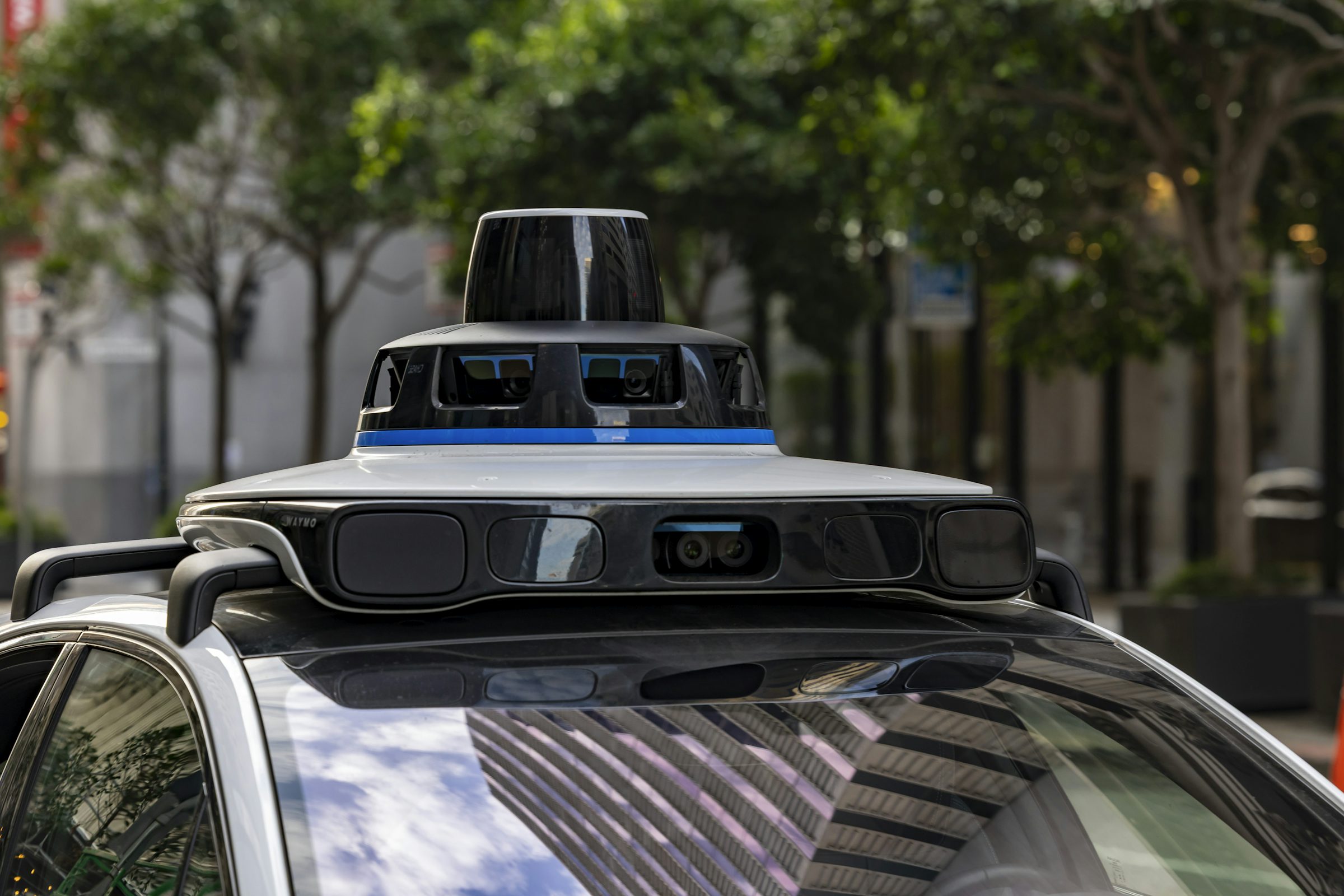
A lot of people assume self-driving cars are already everywhere, quietly weaving through traffic in every city, on every highway, at any hour. That is not what is actually happening. Today’s robotaxis operate inside tightly drawn boundaries: specific neighborhoods, specific road types, and specific weather, with a remote support team watching in the background. Inside those boundaries, though, the safety numbers from the biggest operator are striking enough that it is worth separating the myth from what the data actually shows.
What “Self-Driving” Actually Means
Not every car with “autopilot” branding is in the same category. The industry uses SAE levels, running from Level 2 systems that still require a human driver paying attention, up to Level 4, where the car handles the entire drive within a defined area with no one at the wheel. A true robotaxi service, like Waymo’s, runs at Level 4: rider-only, no safety driver, but only inside a mapped service zone the company has tested extensively. NHTSA’s Standing General Order on crash reporting requires companies running these Level 2 through Level 4 systems to report qualifying crashes, which is also where most of the public safety data on these vehicles originates.
How a Self-Driving Car Knows Where It Is
A self-driving car stacks several positioning systems on top of each other rather than trusting one. Satellite positioning, the same basic system that powers your phone’s map app, as we explained in how GPS actually works, gets a vehicle to within a few meters under open sky, which is nowhere near precise enough to stay in a lane. So the car layers lidar, radar, and camera readings on top of a pre-built high-definition map of the service area, matching what its sensors see right now against what the map says should be there down to the curb and the lane line.
All of that sensor data has to be processed dozens of times per second, in a vehicle with no human able to take over if the software freezes. That workload runs on dense, purpose-built onboard computing, the same broad category of hardware we cover in our explainer on AI chips and what GPUs and NPUs actually do, scaled up to data-center-class chips rather than the efficiency-focused silicon in a phone or laptop.
What the Safety Data on Self-Driving Cars Shows
Waymo publishes the most detailed self-reported safety dataset of any self-driving car operator, and as of its most recent update through June 2026 it had logged 271.3 million rider-only miles with no human driver, across its Los Angeles, San Francisco Bay Area, Phoenix, Austin, and Atlanta operations. Against a human driving benchmark built from police-reported crash data in the same metro areas, the company’s own safety hub reports 95% fewer crashes serious enough to involve a severe injury or worse, 82% fewer crashes involving an airbag deployment, and 82% fewer crashes causing any reported injury. Pedestrian-injury crashes were down 93% and cyclist-injury crashes were down 86% against the same benchmark.
Those are large reductions, and Waymo is unusually transparent about the methodology behind them, publishing the underlying research and adjusting its human-driving benchmark for where its vehicles actually operate rather than comparing against national averages. Even so, the company’s own documentation is careful to note there is no perfect apples-to-apples comparison between human and autonomous-vehicle crash data, and the numbers remain a single operator’s self-reported analysis rather than an independently audited result.
Where the Limits Actually Are
This is where the myth breaks down. A self-driving car’s safety record applies only inside the exact conditions it was built and tested for. Current services avoid highways in most markets, lean heavily on dry weather, and stop entirely rather than guess when something outside their training falls in front of them, like an unusual construction detour or an object the mapping system has never seen before. Expanding a service area is slow by design, because every new street has to be mapped, tested, and validated before rider-only trips can run there, which is the opposite of a system that drives anywhere, instantly.
What Happens Next
The near-term trend for self-driving cars is more cities and more hours of operation rather than a sudden jump to true anywhere-anytime driving. Highway driving, snow, and dense mixed-traffic downtown cores remain the hardest unsolved problems, and every operator in this space has said expansion will stay deliberately incremental. Treat any specific mileage or city count as a snapshot of a fast-moving rollout rather than a permanent figure.
FAQs
Is a robotaxi the same as a self-driving car?
A robotaxi is a specific application of self-driving technology: a Level 4 vehicle offering rides to the public with no human driver, inside a defined service area. Plenty of other self-driving car research and development happens outside the robotaxi business model, including personal vehicles with driver-assistance features that still require a human behind the wheel.
Do self-driving cars need a human in the car at all?
For true Level 4 robotaxi service, no human driver is required inside the vehicle, though a remote support team typically monitors operations and can provide guidance in unusual situations. Lower automation levels still require an attentive human driver ready to take over.
Why don’t self-driving cars drive on highways yet?
Highway speeds raise the stakes of any sensor or software error, and merging at speed among human drivers is a harder problem than low-speed city streets. Most current self-driving car services deliberately exclude highways from their service area while that capability matures.
How accurate is the safety data companies like Waymo publish?
It is the most detailed dataset currently public for any robotaxi operator, with a documented methodology comparing the company’s own crash reports against a reweighted human driving benchmark. It is still self-reported by the company rather than independently audited, so treat the headline percentages as a strong signal rather than a fully independent verdict.
Will self-driving cars be available everywhere soon?
Not based on the current pace of rollout. Every operator has expanded city by city and street by street, validating each area before offering rides there, and executives have consistently described this as a deliberately slow process rather than a nationwide switch that flips on at once.













Discussion about this post