

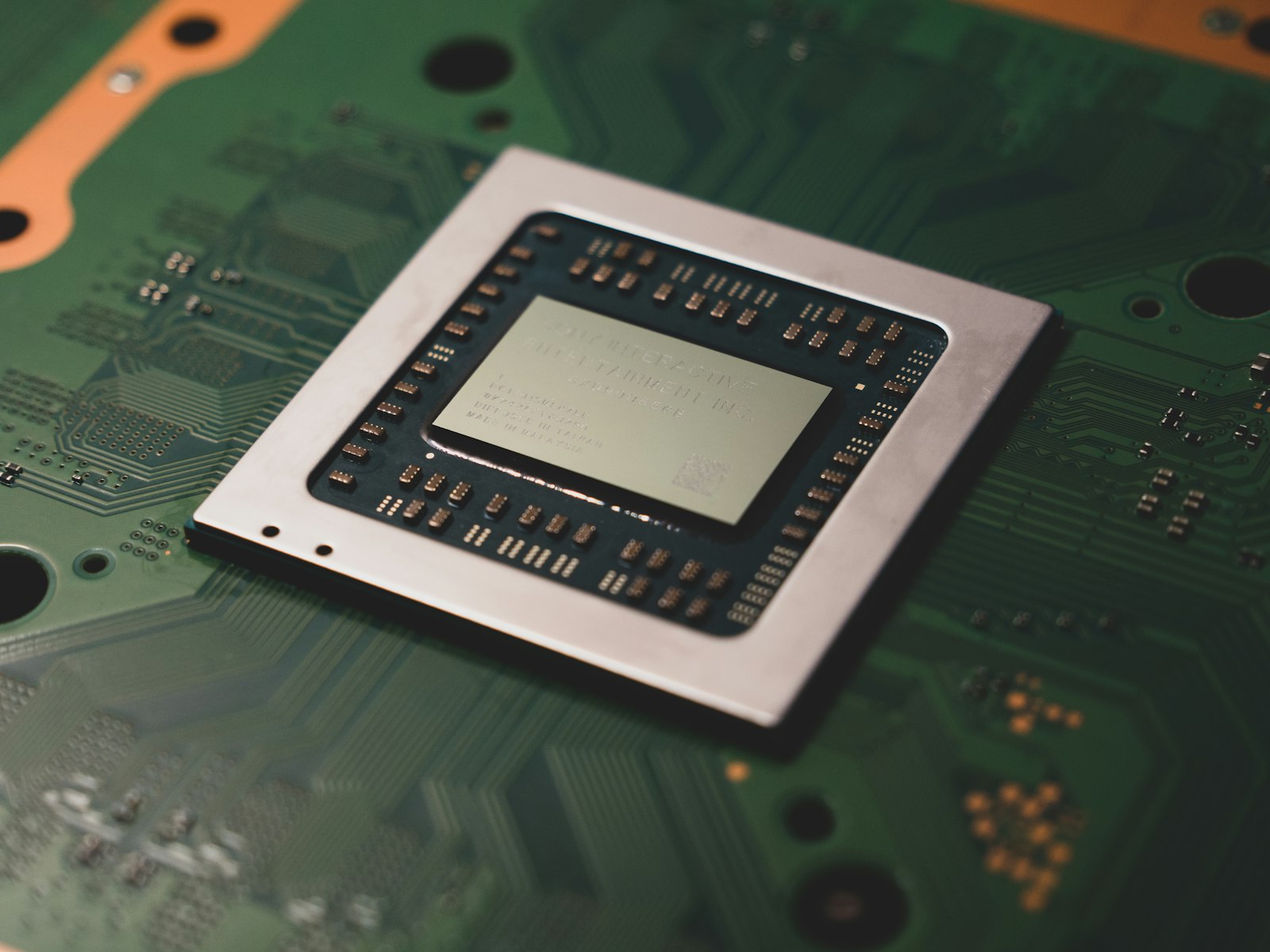
Why would a chip maker build a processor that works nothing like the one in your laptop, modeled instead on how neurons fire inside a human brain? The short answer is power. Neuromorphic computing chips can run certain AI workloads using a tiny fraction of the electricity a conventional GPU needs, by copying the brain’s trick of only using energy when something actually happens, rather than running on a constant clock cycle whether there’s new information or not.
It’s still a research technology rather than something in your phone, but the systems being built right now show why some chip designers think it’s the only realistic path to AI that doesn’t keep demanding ever more power.
How a Neuromorphic Chip Differs From a Normal One
A regular processor, whether it’s a CPU, a GPU, or an NPU built specifically for AI math, runs on a clock. Every tick, it processes a fresh batch of data, whether or not anything meaningful has changed since the last tick. That constant ticking is simple to design around, but it burns power continuously.
A neuromorphic chip is built around spiking neural networks instead. Its artificial neurons sit idle, using almost no power, until they receive enough input to cross a threshold, then they “fire” a brief electrical spike to the neurons connected to them, the same event-driven pattern biological neurons use. Nothing happens, nothing costs power. That single design choice is where most of the efficiency gain comes from.
Intel’s Hala Point: The Largest System Built So Far
The clearest real-world example is Hala Point, a research system Intel built with Sandia National Laboratories using its Loihi 2 neuromorphic chips. The announcement describes it as the world’s largest neuromorphic computing system, built from more than 1,100 Loihi 2 chips networked together into a system capable of supporting roughly 1.15 billion neurons, in the same general range as an owl’s or a capuchin monkey’s brain, though Intel is careful to frame that as a scale comparison rather than a claim that the system thinks anything like an animal does.
What makes Hala Point notable isn’t just scale. Intel has reported that systems built this way can process certain workloads at a fraction of the energy cost of GPU-based systems doing the same job, which is the entire point of building neuromorphic hardware in the first place: not necessarily to be faster in an absolute sense, but to do useful work on a power budget conventional chips can’t match. Sandia plans to use the system for research into efficient AI, optimization problems, and modeling how brain-like computation could work at scale.
IBM’s NorthPole: A Different Bet on the Same Idea
IBM took a related but distinct approach with NorthPole, a chip IBM detailed in a 2023 paper in the journal Science. Rather than spiking neurons specifically, NorthPole’s defining feature is keeping all of a neural network’s data on the chip itself, with no separate external memory to shuttle data back and forth to, which is normally one of the biggest energy and time costs in running AI workloads. IBM reported large efficiency and speed advantages over conventional GPU-based inference on certain image-recognition benchmarks as a result, while being explicit that NorthPole is built for running already-trained models efficiently, not for training new ones from scratch.
Together, Hala Point and NorthPole illustrate that “neuromorphic” isn’t one fixed design. It’s a family of approaches that all borrow something from how biological brains compute, whether that’s event-driven spiking, keeping memory and computation physically close together, or both.
Where This Technology Shows Up Today
Outside research labs, the clearest commercial use of brain-inspired chip design is at the smallest end of the power scale, not the largest. BrainChip’s Akida processors, for instance, are built for edge devices that need to run simple AI tasks, like keyword detection or basic sensor pattern recognition, on a power budget measured in milliwatts rather than watts, the same kind of always-on, low-power niche that makes edge computing and on-device processing attractive for battery-powered hardware. That’s a far more modest application than a research system with a billion artificial neurons, but it’s the version of this idea shipping in products today, rather than sitting in a national lab.
Why This Hasn’t Replaced Conventional AI Chips
Neuromorphic hardware’s efficiency advantage comes bundled with a real cost: the software ecosystem built around training and running mainstream neural networks doesn’t map cleanly onto spiking neurons or on-chip-only memory. Training a model for one of these chips, or adapting an existing model to run on one, generally requires specialized tools that are far less mature than the frameworks built around GPUs over the last decade. That gap, not the hardware itself, is the main reason this stays a research and niche-edge technology rather than something replacing the GPU in your on-device AI features any time soon.
What to Watch For Next
The realistic near-term path isn’t a neuromorphic chip replacing your laptop’s processor. It’s narrower: specific always-on sensing tasks moving to ultra-low-power chips like Akida, and large research systems like Hala Point helping scientists figure out which problems genuinely benefit from brain-inspired design before that knowledge filters down into commercial hardware. Treat any claim that neuromorphic chips are about to replace GPUs broadly as overstated; the more credible story is a slow expansion into the specific jobs where this approach’s energy advantage matters most.
FAQs
Is neuromorphic computing the same thing as a neural network?
No. A neural network is a software model that can run on any processor, including a normal GPU. Neuromorphic computing refers to hardware specifically designed to mimic how biological neurons physically compute, which is a different, more specialized layer than the software model itself.
Can I buy a neuromorphic chip for my own computer?
Not in any mainstream consumer product today. Loihi 2 and NorthPole exist mainly as research hardware, while BrainChip’s Akida is sold to device manufacturers for embedded products rather than to individual consumers as a standalone component.
Does a neuromorphic chip actually think like a brain?
Not in any meaningful sense. These chips borrow specific mechanisms, like event-driven spiking or on-chip memory, from how neurons physically behave, but they don’t replicate consciousness, reasoning, or anything resembling how a biological brain produces thought.
Why does event-driven processing save so much power?
A conventional chip updates every component on every clock cycle regardless of whether anything changed, which burns energy continuously. A neuromorphic chip’s artificial neurons only use power when they actually fire a signal, so idle periods, which make up most of many real-world data streams, cost almost nothing.
Will neuromorphic chips eventually replace GPUs for AI?
Unlikely to replace them broadly in the foreseeable future. The software tools for training and deploying models on neuromorphic hardware remain far less developed than the GPU ecosystem, so this technology is more likely to keep expanding into specific low-power niches than to displace GPUs for general AI work.











Discussion about this post